







Police & Fleet
The 2027 Dodge Charger Police Car Is Coming, and That's Big News for Government Auctions
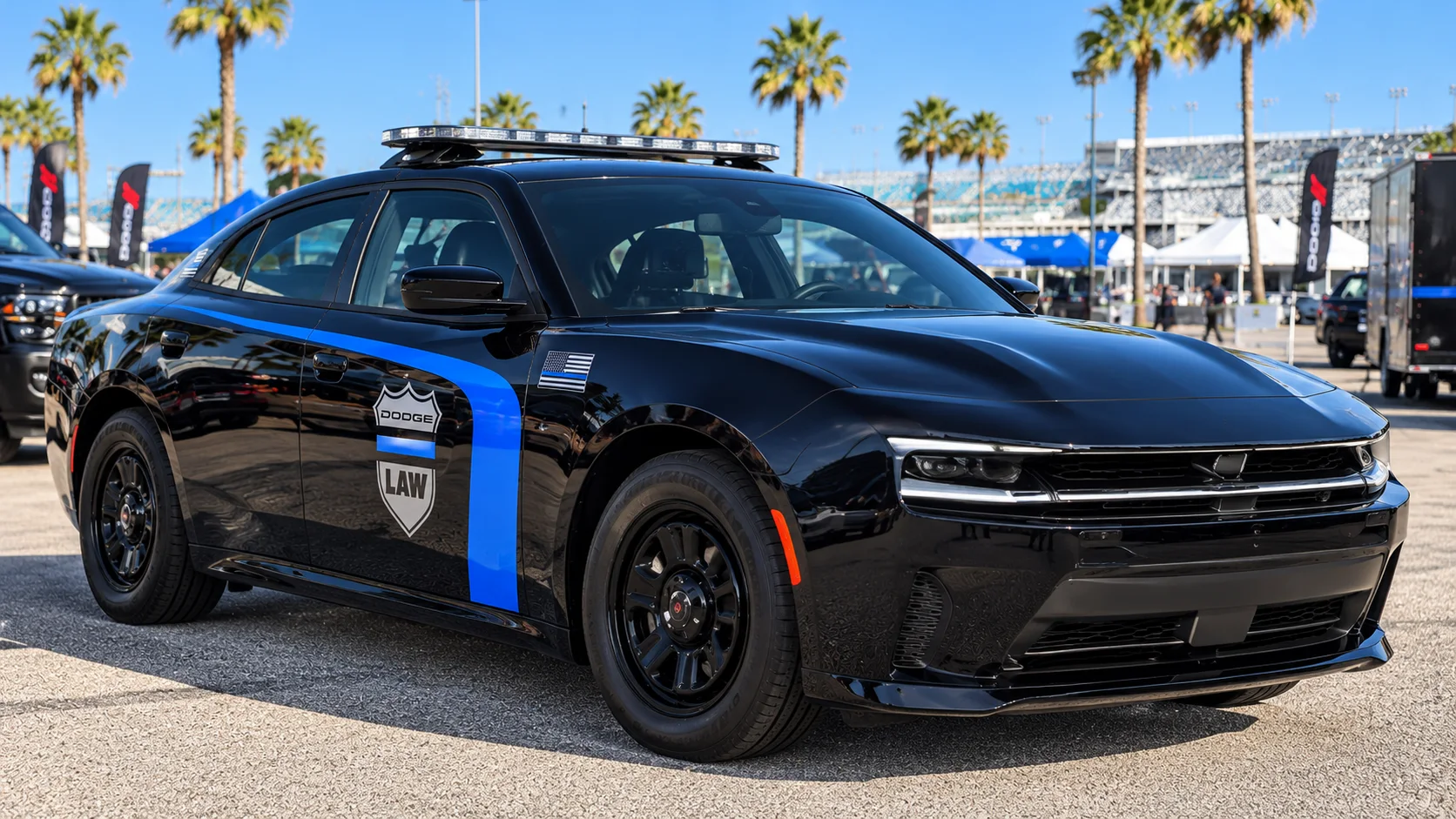
Every new police car starts a chain reaction, and the one Dodge just showed off is going to be felt at government auctions for years. In August, Dodge parked a fully upfitted 2027 Charger police prototype at Daytona International Speedway for the Police Fleet Expo, and Team One Network reported that police orders are expected to open in the summer of 2027. When agencies start bringing those new cars home, the Charger Pursuits they replace head to the auction block, and that is where auction buyers come in.
The cars leaving service will be the 2015 through 2023 Charger Pursuits, the last generation of the HEMI and Pentastar patrol cars. Dodge sold roughly 170,000 Pursuits from 2006 through 2023, and the final one was built at the Brampton Assembly Plant in Ontario in December 2023. Those cars have been doing the heavy lifting on highways and city streets ever since, and the new Charger gives departments a fresh reason to rotate them out.
When the retired Chargers will show up
Each agency retires its patrol cars on its own schedule, usually based on mileage, age and the condition of the car, so retired Chargers already turn up on government auction sites regularly. What the 2027 model adds is a natural replacement for departments that want to stay with a Charger, which means more agencies will be ready to retire their older cars once the new ones arrive. Buyers who start watching now will learn the market well before that wave builds.
GovDeals, GSA Auctions and the other government sale sites list these cars as they come in, often with mileage, engine hours and photos of the cabin and equipment. Each listing is a small window into how the car was used, which makes them well worth reading closely.
Find them on UX Search, and see what they sold for
The easiest place to follow these cars is UX Search, which checks GovDeals, GSA Auctions and the other major government auction sites in one search. A search for Dodge Charger Pursuit shows every retired Charger currently up for bid, so you can compare mileage, location and closing times side by side.
UX Search Analytics shows just how active this market is. From April 20 through October 15, 2026, GSA Fleet sold 313 Dodge Chargers from the federal fleet, with a middle sale price of $14,725 and an average of $14,426 at an average of 53,353 miles. Prices ran from $625 to $25,450, and most of the cars sold in the $10,000 to $20,000 range. The 2018 through 2022 model years were the strongest sellers, with middle prices of roughly $13,500 to $15,000, and on October 15 alone a 2018 Charger with 54,742 miles sold in San Diego for $13,700.
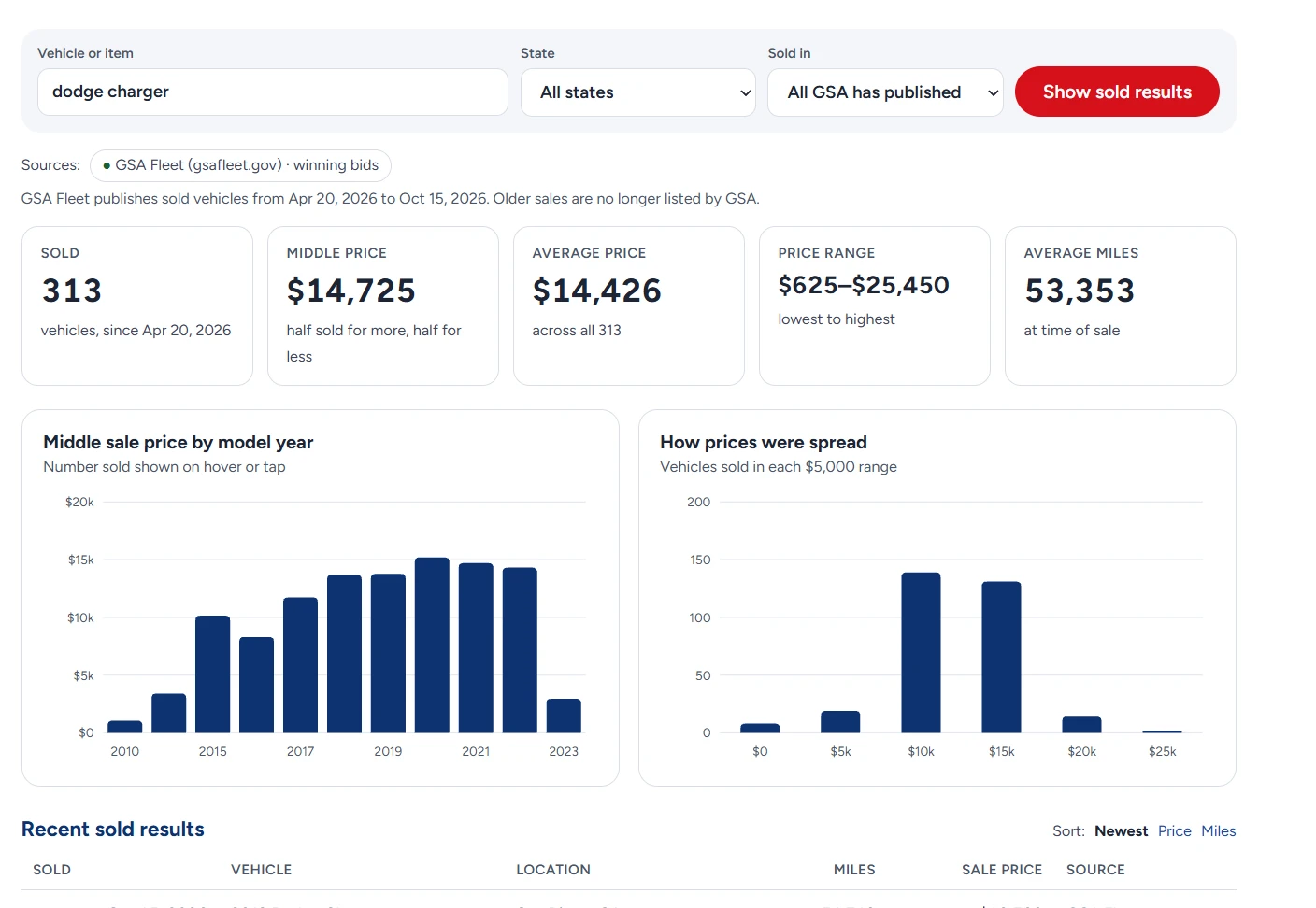
Before you bid, check UX Search Analytics to see what Charger Pursuits have actually sold for. Analytics pulls closed results from GSA Fleet and GovDeals for the past week, month or year, and you can narrow them by state, which gives you a real-world price range instead of a guess. Because those figures update with every closed sale, they will show the market as the 2027 Charger arrives and more retired cars come up for auction.
HEMI or V6: knowing which one you are bidding on
The two engines in the last Charger Pursuits make for two very different cars, and the Michigan State Police measured the difference when it tested the 2023 models. The 5.7-liter HEMI V8 with rear-wheel drive made 370 horsepower and 395 lb-ft of torque, reached 60 mph in 6.01 seconds and 100 mph in 14.10 seconds, and averaged 1:36.33 around the two-mile Grattan Raceway road course. The 3.6-liter Pentastar V6 with all-wheel drive made 300 horsepower and 260 lb-ft of torque, reached 60 mph in 7.57 seconds and 100 mph in 19.06 seconds, and averaged 1:37.80 on the same course. Both were limited to a top speed of 140 mph.
That gives buyers a clear choice. The HEMI is the quicker car with more power on tap, while the all-wheel-drive V6 is the steadier pick for snow country and daily driving. The surest way to confirm which engine a car has is to run its VIN through the free vehicle decoder on the National Highway Traffic Safety Administration website before you bid.
Police cars also need a closer look than the odometer alone can give. Patrol cars often idle for hours on duty, so engine hours and idle hours tell a big part of the story, and maintenance records show how well the car was kept. Many listings include these details, and the best-documented cars tend to give buyers the most confidence.
Meet the 2027 Charger police car
The new patrol Charger is built on the gas-powered Charger Sixpack, and the prototype at Daytona carried the 3.0-liter twin-turbocharged Hurricane inline-six in standard-output form. In the civilian Charger R/T, that engine makes 420 horsepower and 468 lb-ft of torque and works with an eight-speed automatic. Team One Network reported that all-wheel drive will be standard on the police version.
On paper, that is a big step up from the cars it replaces. The Hurricane six makes 50 more horsepower and 73 more lb-ft of torque than the old HEMI, and 120 more horsepower than the Pentastar V6. Dodge also offers a 550-horsepower high-output version of the same engine in the Charger Scat Pack, so the family has plenty of strength to draw on.
Official police figures will come later, after the Michigan State Police runs the production car through its annual testing. Until then, the civilian four-door offers a good preview. Edmunds tested a 2026 Charger Sixpack R/T four-door with the same 420-horsepower engine and all-wheel drive and recorded these results:
- 0 to 60 mph: 4.7 seconds with launch control
- Quarter mile: 13.0 seconds at 105.7 mph
- Braking from 60 mph: 119 feet
- Cornering grip: 0.95 g on the skidpad
- Weight: 4,907 pounds as tested
Put next to the old Pursuit, those numbers tell a fun story. The civilian four-door beat the 2023 HEMI Pursuit's 0 to 60 time by more than a second, and 0.95 g of grip is sports-sedan territory for a car this size.
See the original post on Instagram
Built to carry the gear
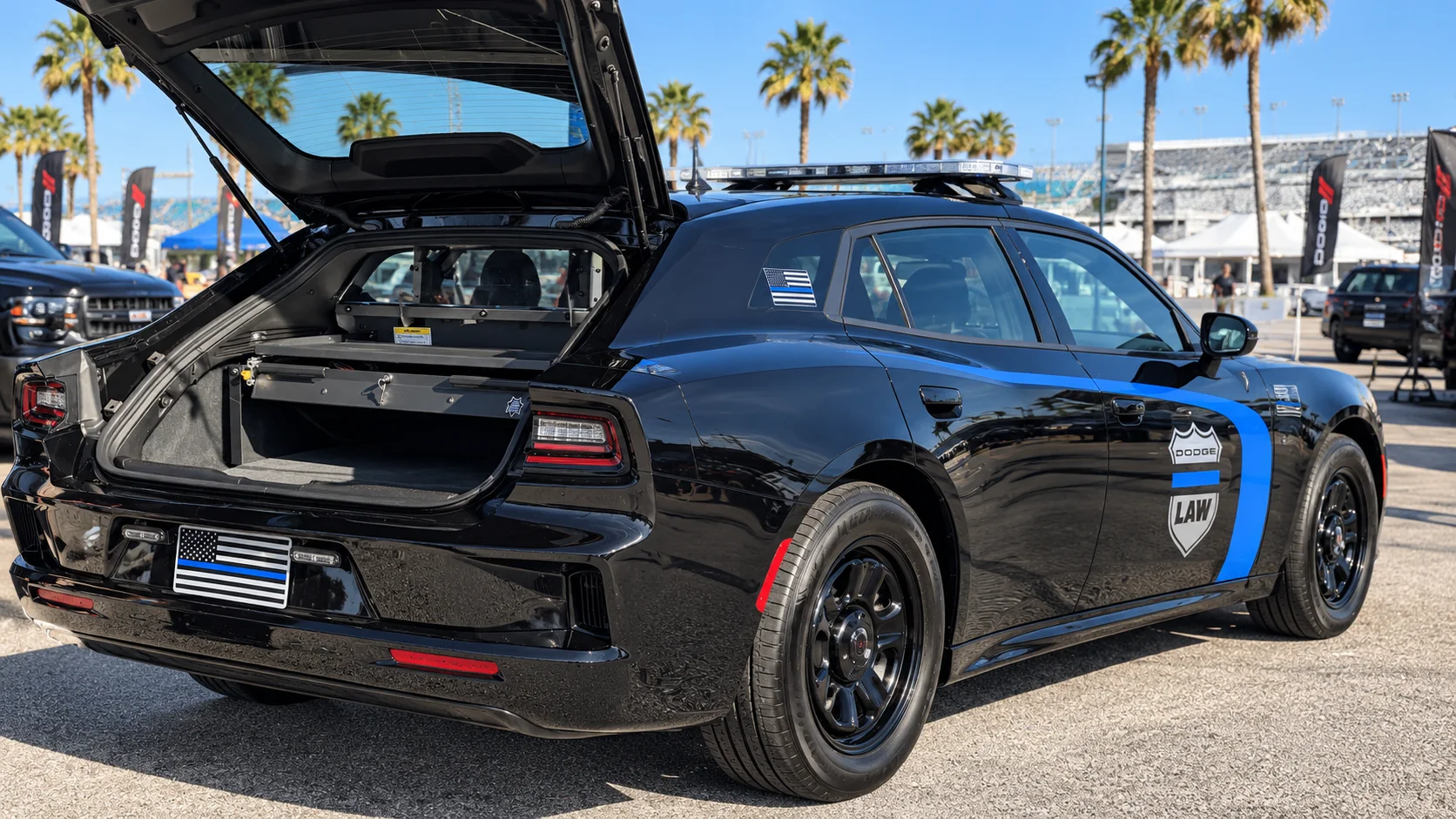
The biggest change from the old Pursuit starts at the back of the car. The new Charger is a liftback, so the prototype's rear hatch opens onto a cargo area fitted with a large equipment tray, and a divider behind the rear seat keeps that gear separate from the passenger compartment. Moving forward, a partition stands between the back seat and the officers up front.
The front of the cabin has been cleared out for work. The showroom Charger's large center console is gone, replaced by open space for the radio, siren and light controls, switch panels and a mounted computer. A compact pistol-grip electronic shifter and push-button start take up very little room, which leaves officers more space for the equipment they use on every shift.
A Charger to catch a Charger
Dodge has made it clear that it intends to stay in the police business. Chrysler and Dodge CEO Matt McAlear told MoparInsiders that police cars are "absolutely part of the plan," and he put it in words any trooper would enjoy: "It's always taken a Charger to catch a Charger."
For auction buyers, that is good news on both ends. The 2027 Charger will put a new generation of patrol cars on the road, and the proven Charger Pursuits it replaces will keep arriving at government auctions, ready for their next owners. You can watch them arrive on UX Search and check their sold prices on UX Search Analytics.
Photo & Resource Information Credits: Illustrations: AI-generated. Embedded photos: Team One Public Safety Division
© 2026 UX™ LLC. All Rights Reserved.