


The Nevada Highway Patrol Camaro: Elko District's High-Speed Interceptor
The working life of a 1995 Chevrolet Camaro B4C built for the wide-open highways of northern Nevada.
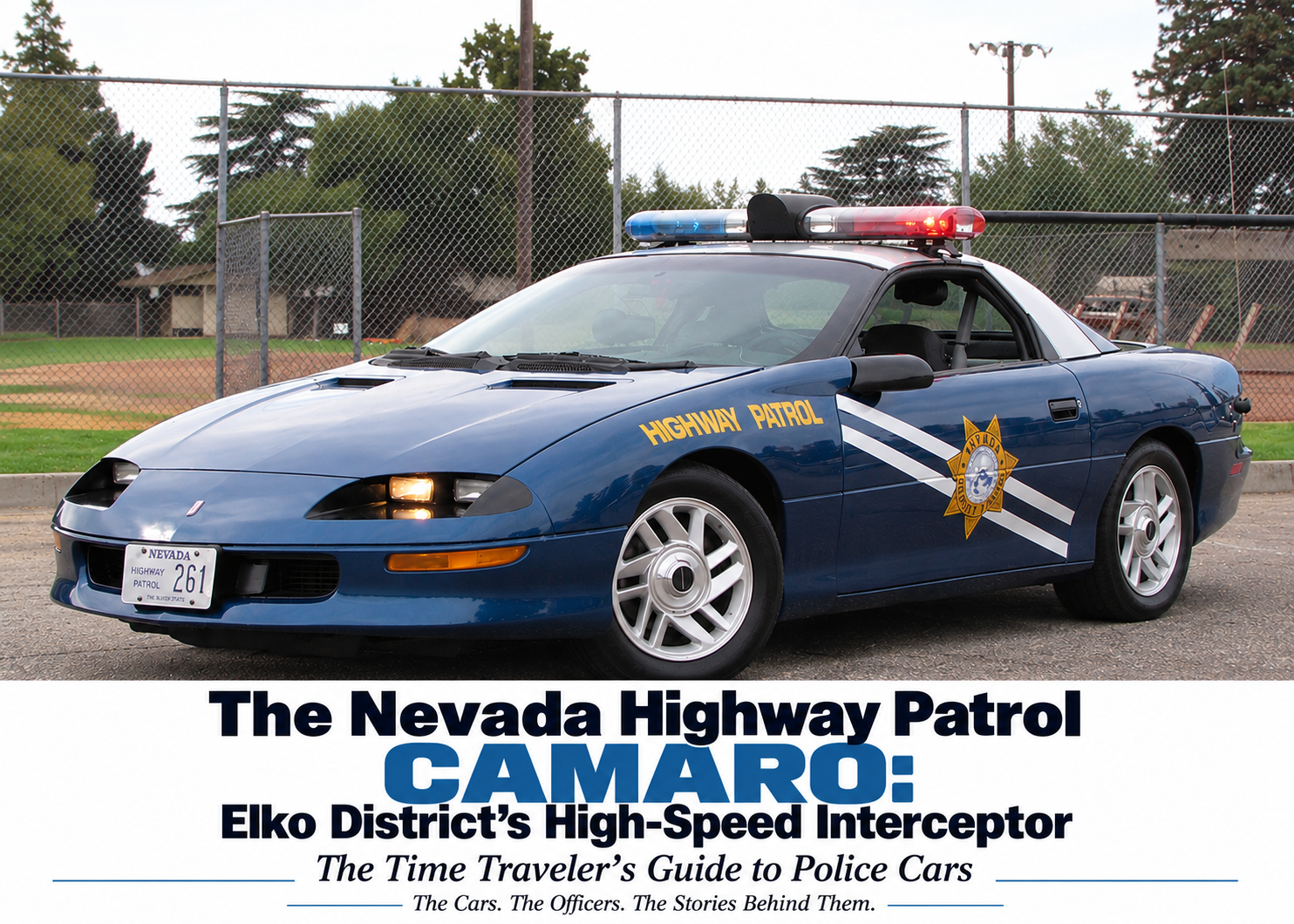
In the mid-1990s, a Nevada Highway Patrol trooper in Elko stepped into a patrol car that immediately stood apart from the sedans filling American police fleets. The vehicle carried the unmistakable shape of a Chevrolet Camaro, finished in deep blue with a silver roof and marked with the agency's star. A Jetsonic light bar crowned the roofline, transforming a familiar sports-car silhouette into a highway-enforcement tool built for speed, stability, and long-distance patrol work. The trooper's new office came with a six-speed manual transmission, a 275-horsepower LT1 V8, and a pursuit-rated speedometer stretching to 150 mph, creating a patrol environment designed for the long, fast stretches of Interstate 80.
Chevrolet engineered the B4C Special Service Package for agencies that required more capability than a standard pursuit sedan. The LT1 V8 delivered strong acceleration, while heavy-duty cooling, uprated brakes, reinforced suspension components, and a police-grade electrical system created a car capable of sustained high-speed operation. Michigan State Police testing from the era recorded top speeds above 150 mph and acceleration figures that placed the Camaro among the quickest enforcement vehicles available in the United States. For a district like Elko, where the horizon seems to stretch endlessly, those numbers translated directly into daily performance.
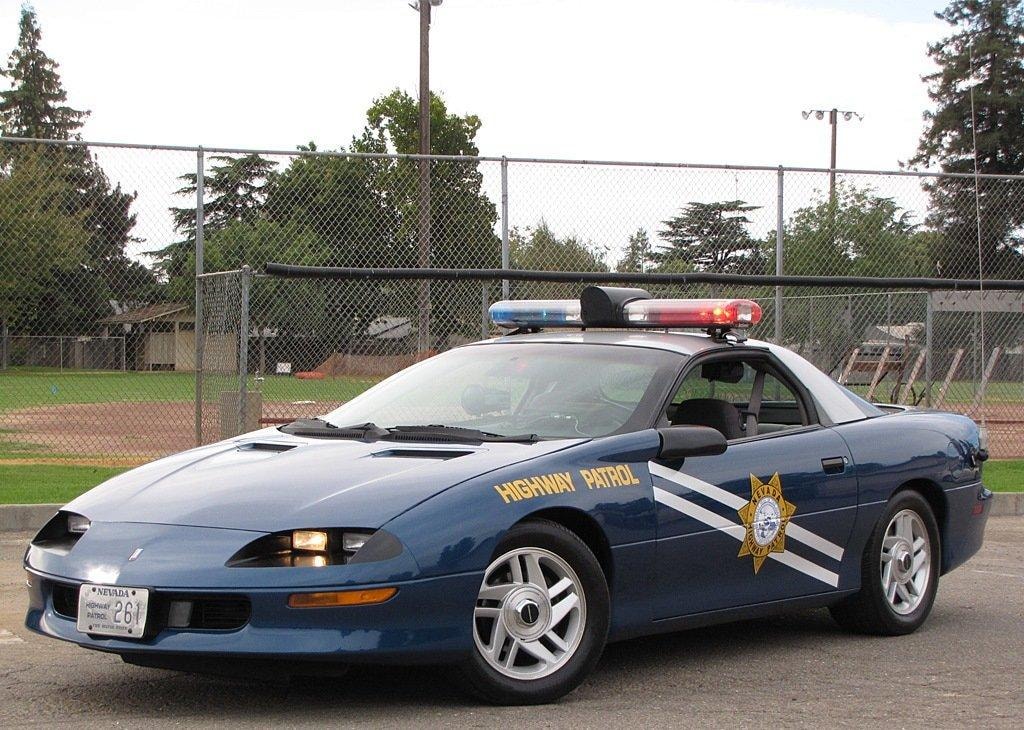
The NHP Camaro in full livery — deep blue body, silver roof, Jetsonic light bar, and agency star on the door.
The Camaro assigned to Elko spent its working life in this environment. The region's long highways, open desert, and wide patrol zones created a natural home for a pursuit vehicle built around speed and stability. The car wore Nevada Highway Patrol markings, the agency's star on each door, and the blue-and-silver livery that defined the fleet. The Jetsonic bar stood above the roofline, while antennas mounted on the body supported the communications equipment inside. Every element of the car's appearance reflected its purpose as a fast, focused interceptor built for rural enforcement.
Inside, the Camaro offered a trooper's office arranged around the tools of highway patrol work. The dashboard carried the 150-mph speedometer and full gauge cluster, while the cabin housed the Federal Signal Unitrol Touchmaster controller, MPH K55 Doppler radar, K-band radar detector, Motorola scanner, CB radio, flashlight, reading light, and rear-console speaker. The trunk held the Motorola Spectra radio and the Federal Signal Stinger spike system. Each component contributed to the Camaro's role as a pursuit vehicle, creating an environment where the officer monitored radar, managed communications, and controlled emergency lighting while working through the six-speed transmission.
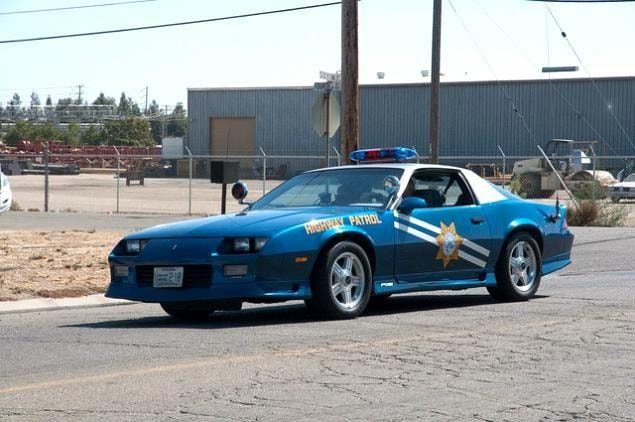
The Camaro's low stance and sports-car proportions made it immediately recognizable on Interstate 80.
The Camaro accumulated its history one mile at a time. Over roughly a dozen years in service, the odometer climbed past 140,000 miles, reflecting a career spent on the highways it was built to patrol. Each shift added another chapter to the car's story, from routine traffic enforcement to high-speed responses across the wide-open terrain of northeastern Nevada. The equipment remained in place, the livery stayed true to its service era, and the car continued performing the job Chevrolet engineered it to do.
The blue body, silver roof, Jetsonic bar, and NHP markings present a patrol car that looks ready for duty even decades later. The stance, proportions, and unmistakable presence of a Camaro in uniform create a vivid reminder of how unusual and memorable these cars were in active service. The photos you provided capture a machine built for speed, adapted for enforcement, and deployed in a region where its capabilities mattered every day.
The Camaro's story invites one final chapter. Somewhere in Elko, troopers spent years behind that steering wheel, watching the K55 radar, shifting through the gears, and working the highways with a sports car as their office. Those experiences shaped the car's history as much as its equipment or mileage. The next step is finding the officers who drove it, learning how the Camaro behaved on Interstate 80, and capturing the human side of a pursuit vehicle that survived three decades to reach us today.
Explore More
Find more stories like this on the Articles page or search for retired police vehicles on Search Government Auctions.