


Yahoo Auctions: The Marketplace That Couldn't Attract a Crowd
Yahoo had the brand, the traffic and free listings—but it could not create the active bidding community that made eBay successful in America.
Yahoo had the brand, the traffic and free listings—but it could not create the active bidding community that made eBay successful in America.
UX Auctions Magazine Staff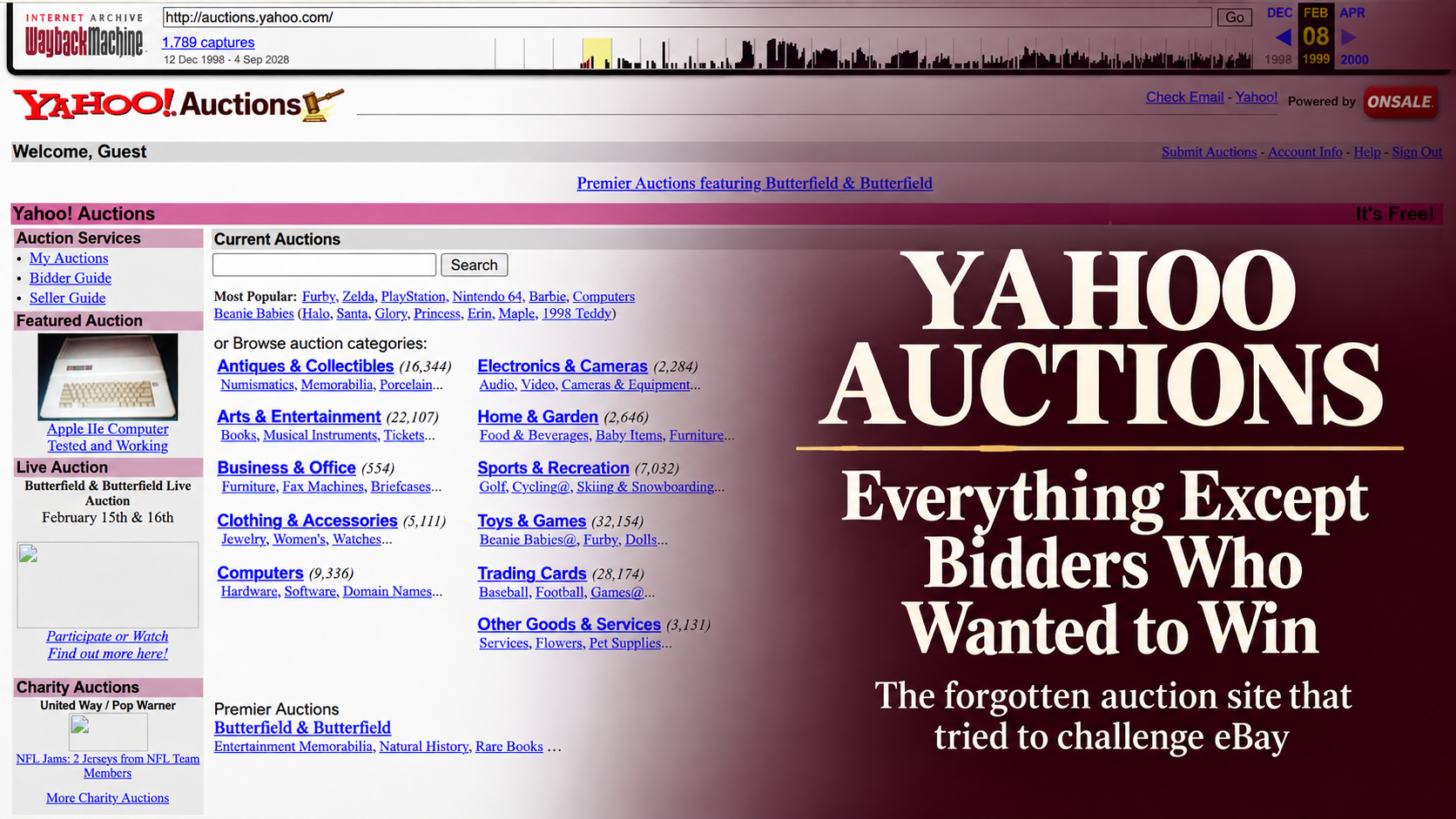
Yahoo Auctions in February 1999. The marketplace advertised free auctions while attempting to compete with eBay's rapidly growing bidding community.
Yahoo Auctions should have been a success.
When it launched in the United States in September 1998, Yahoo was one of the internet's most powerful companies. It had a famous brand, enormous traffic and a growing collection of services designed to make Yahoo the web's front door.
The company began in 1994, when Stanford graduate students Jerry Yang and David Filo created a hand-organized directory called "Jerry and David's Guide to the World Wide Web." It became Yahoo, which was incorporated in 1995 and went public the following year.
Yahoo quickly expanded beyond its directory. It added email, news, finance, sports, shopping, messaging and online communities. The goal was "stickiness": keep visitors inside Yahoo's network for as long as possible.
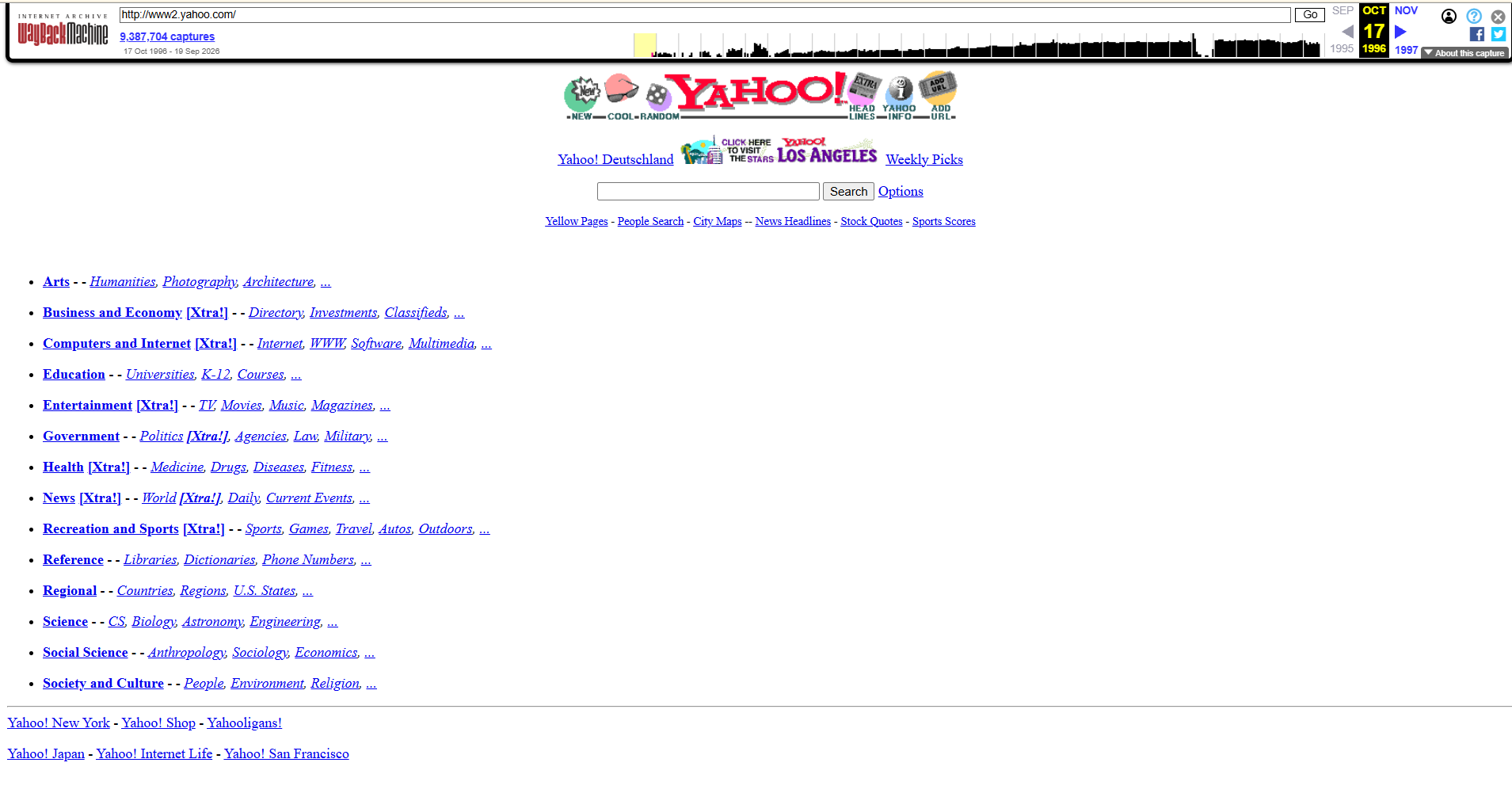
Yahoo's homepage on October 17, 1996. Before becoming a sprawling internet portal, Yahoo primarily helped users navigate the web through a human-organized directory.
Auctions fit neatly into that strategy. They encouraged people to browse, return to listings and spend more time on the site.
Yahoo also appeared to have an irresistible offer for sellers: access to its huge audience without the fees charged by eBay.
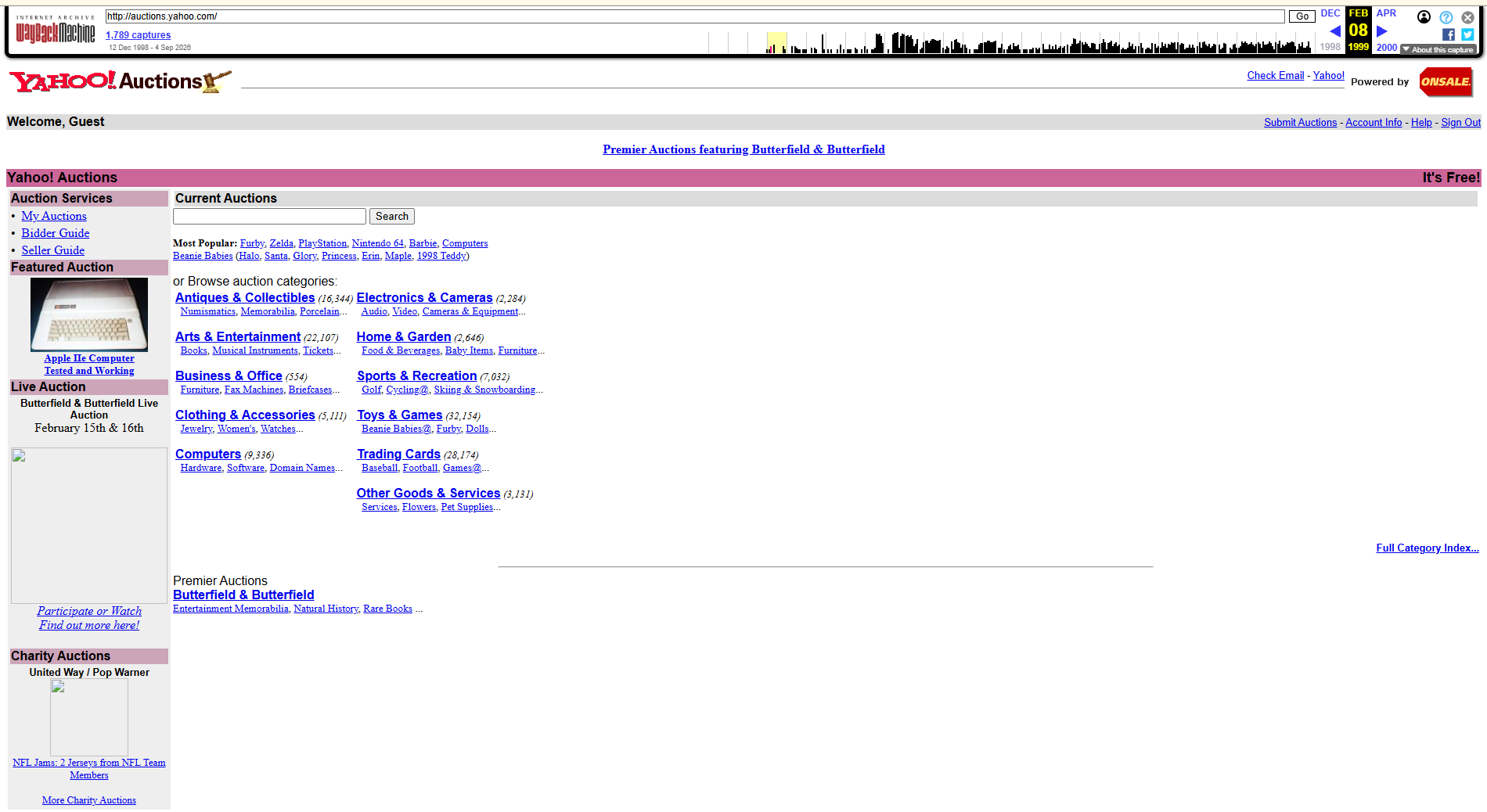
Yahoo Auctions on February 8, 1999. The marketplace prominently advertised "It's Free!" and identified Onsale as its auction-technology partner.
But a marketplace needs more than traffic. It needs buyers and sellers to arrive together.
Yahoo could attract listings by making them free, but listings without serious bidders were not especially valuable. Buyers wanted a steady supply of desirable merchandise. Sellers wanted active competition and strong final prices. If either group was missing, the other had little reason to stay.
Research into early online marketplaces showed how quickly that cycle could reinforce itself. More listings attracted more visitors. More visitors improved sellers' results. Better results encouraged still more people to list.
Yahoo never generated enough momentum in the United States to make that cycle work in its favor.
The company responded by repeatedly changing its fees. Yahoo Auctions began as a free service, but in January 2001 it introduced listing charges as the collapse of the dot-com advertising market pushed the company to seek new revenue.
Yahoo said the fees reduced frivolous listings and improved the quality of the marketplace. But they also weakened its clearest selling point. Sellers were now being asked to pay for access to a site that still lacked a large, active bidding community.
Yahoo later reduced and restructured the charges. In 2005, it reversed course again and eliminated both listing and final-value fees for American users.
The changes did not solve the fundamental problem. Yahoo kept adjusting the price of admission when the real issue was the size of the crowd inside.
In May 2007, the company announced that Yahoo Auctions would close in the United States and Canada. New listings ended on June 3, followed by bidding and purchasing on June 16.
Contemporary traffic estimates gave Yahoo Auctions only about 0.2 percent of American auction-site traffic. Yahoo possessed the technology, brand and promotional power to operate a marketplace, but it never gave enough buyers and sellers a reason to move there together.
The story unfolded differently in Japan.
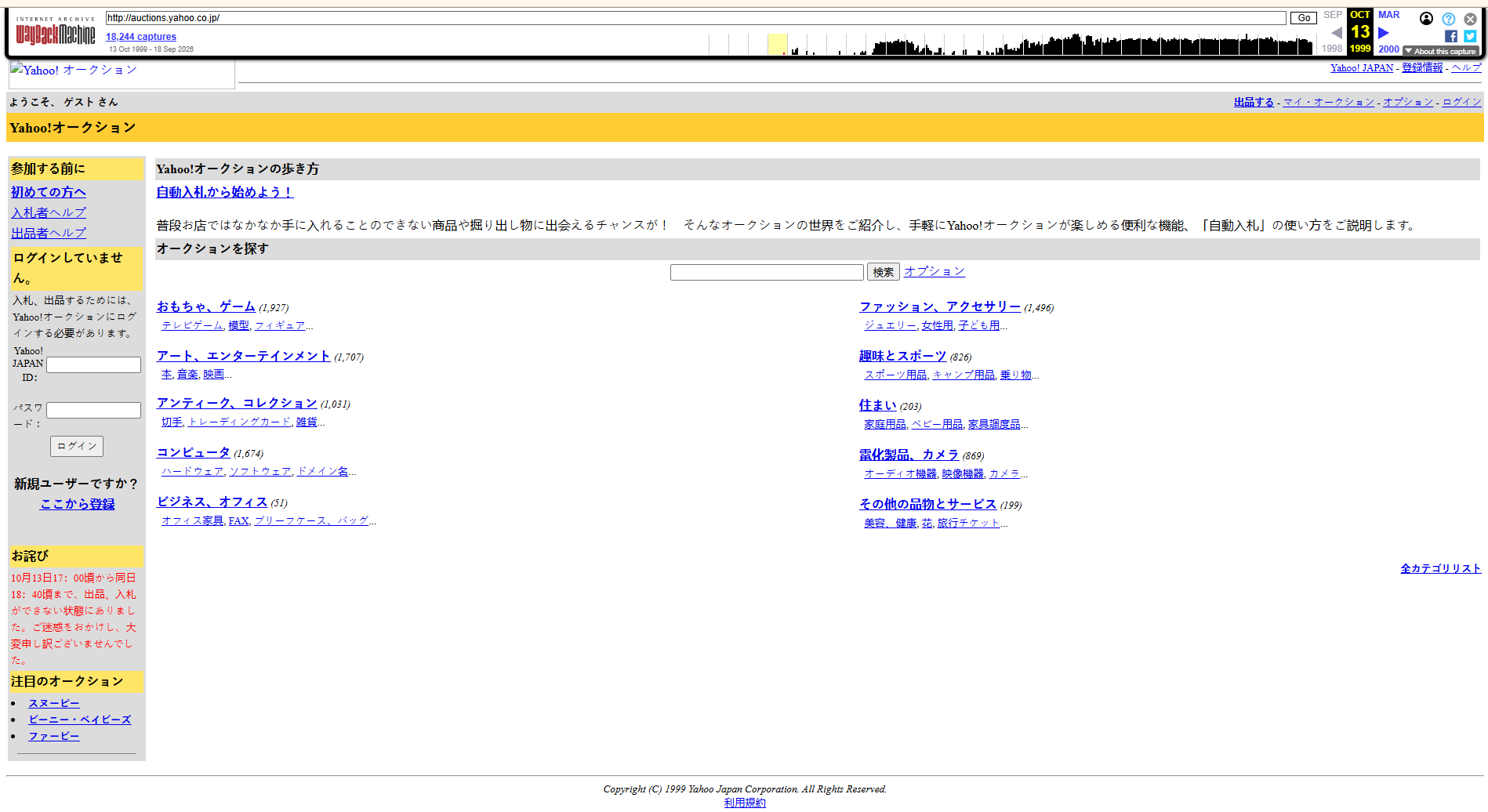
Yahoo Auctions Japan on October 13, 1999, shortly after its launch. Yahoo established a local auction community in Japan that its international competition could not overcome.
Yahoo Japan launched its auction service in 1999 and established a strong local community. When an international competitor tried to enter the Japanese market, the challenger could not attract enough users and withdrew in 2002.
That reversal revealed the real lesson. Yahoo's auction system was not inherently doomed. Success depended heavily on which marketplace gathered a critical mass of local users first.
Yahoo Auctions remained a major service in Japan, where the Yahoo brand developed through a separate company backed by SoftBank. Its services are now operated by LY Corporation.
The American version of Yahoo Auctions is remembered as one of the internet giant's many ambitious expansions. It looked sensible on paper: combine Yahoo's vast audience with a popular form of online commerce, offer sellers low or nonexistent fees, and promote the service across one of the web's busiest networks.
Yet marketplaces are not ordinary website features. A news page can publish stories even when nobody is reading. An email service can work for one user at a time. An auction needs people competing with one another.
Yahoo built the platform. What it could not build was the crowd.
UX Auctions Magazine