


Online Auction Terms
A clear, professional guide for anyone bidding on government surplus

Government surplus auctions create a language all their own, blending mechanical descriptions, legal phrasing, and timing rules into a vocabulary that feels equal parts bureaucracy and adventure. Understanding these terms gives every bidder a smoother path through the process, a clearer sense of each asset's condition, and a confident grasp of what happens from the moment a listing appears to the moment the winning bidder arrives for pickup. This guide turns the terminology into an entertaining roadmap so every buyer can move through federal, state, and local surplus auctions with clarity and momentum.

Vehicles lined up at an automobile auction facility awaiting inspection and sale.
Run and Drive describes a vehicle that started, shifted into gear, and moved forward and backward during the agency's inspection. The term reflects the behavior observed at intake, and buyers treat it as a snapshot of that moment. Starts / Does Not Move describes an engine that starts while the vehicle remains stationary under its own power. Transmission issues, axle problems, or differential trouble often create this situation, and buyers plan for repairs and transport. Non-Runner describes an engine that stays silent during inspection, and buyers prepare for towing, trailering, and a full mechanical evaluation once the asset reaches its destination.
Parts Only or Salvage assets serve as excellent sources for components, scrap value, or specialized recovery projects. These items often arrive with structural or mechanical challenges, and buyers enjoy them for the opportunities they create in workshops, garages, and fabrication spaces. As Is, Where Is defines the foundation of government surplus sales, with the buyer accepting the asset exactly as it sits. Inspection, loading, transport, and removal all fall under the buyer's responsibilities, and the agency presents the item in its current state for evaluation.
Removal Requirements shape the final stage of the auction process. Many agencies require trailering even for vehicles that run, and listings often include clear instructions such as facility towing, trailer-only removal, or buyer-managed loading. Reading the removal section gives every bidder a complete picture of the pickup process and ensures a smooth exit from the lot.

Vehicles staged inside an auction facility before sale, with lot numbers and condition details marked on windshields.
Auction formats create their own rhythm. Sealed Bid auctions invite each bidder to submit one confidential offer, and the highest qualifying bid wins once the deadline arrives. Timed Auctions open bidding for a set period, often seven to fourteen days, and close automatically at the published time. Fixed Price or Buy Now listings offer a straightforward purchase for the first qualified buyer who accepts the posted price. Term Contract auctions award the right to purchase ongoing surplus over a defined period, often involving scrap metal, recyclables, tires, or bulk materials. Subject to Seller Approval listings allow the agency to review the high bid after closing and decide whether to accept it.
Bidding mechanics add strategy to the experience. A Proxy Bid allows the bidder to enter a maximum amount, and the system automatically raises the bid only enough to stay ahead of competitors. Bid Increment defines the minimum step required to outbid the current leader, with increments varying by platform and asset value. Overtime Period or Soft Close extends the auction when a bid arrives in the final minutes, creating a lively finish that continues until bidding settles. Reserve Price represents a confidential minimum set by the seller, and the asset sells once bidding reaches that threshold.
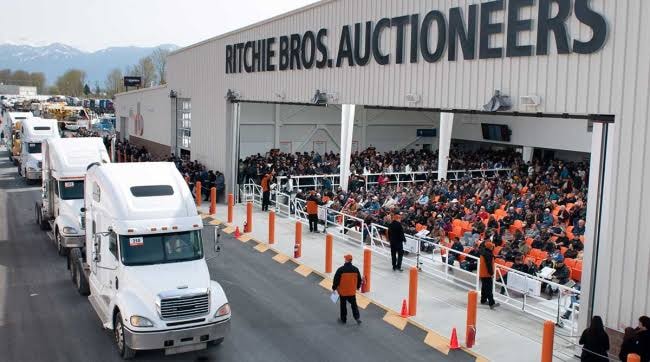
A large live auction event draws crowds of bidders as equipment lines up outside the facility.
Multi-item lots introduce creative pricing structures. Times the Money means the bid represents the price per item, and the final cost equals the bid multiplied by the quantity. All One Money means the bid represents the total price for the entire lot. Bidder's Choice groups similar items together, and the winning bidder selects the specific pieces they want at the winning price.
Financial and post-sale terms complete the journey. Buyer's Premium adds a percentage fee to the winning bid, and bidders calculate the full total before committing. Removal Window defines the number of days available to remove the asset, and buyers plan transport within that timeframe to maintain smooth compliance. Default or Bidder Probation applies when payment or removal requirements remain unmet, and agencies maintain strict standards to keep the auction environment organized and reliable.
Government auction terminology creates a clear structure for every stage of the process, from inspection to bidding to pickup. Understanding these terms gives buyers a strong advantage, a confident grasp of each listing, and a steady path through the world of surplus assets. With the right vocabulary, every bidder moves through the experience with clarity, momentum, and a sense of adventure that makes government surplus auctions one of the most fascinating marketplaces in the country.
Explore More
Want more auction stories? Visit our Articles page for auction history, news and features — or Search Government Auctions to search live government auction listings across the country.