
How to Perform an Onsite Vehicle Inspection at a Government Auction
Government auction vehicles are sold strictly as‑is. No warranty, no returns, and no recourse after payment. Your onsite inspection is the only chance you get to understand what you're buying — and what problems you may inherit. Professional buyers don't rely on luck. They rely on preparation. If you haven't already read it, pair this guide with The Buyer's Vehicle Inspection Kit, which explains the simple, inexpensive tools that make inspections faster, more accurate, and far more profitable.
Before You Arrive — Bring the Right Tools
Showing up without the proper tools wastes your inspection window. Most auctions give you only a few hours, sometimes less. At minimum, bring the essentials outlined in The Buyer's Vehicle Inspection Kit: a flashlight, OBD‑II scanner, multimeter, tread gauge, UV light, gloves, magnet, notepad, and your printed checklist. These tools dramatically increase what you can detect in a short amount of time.
Exterior Inspection
Start with a slow walk around the vehicle. Exterior issues are the easiest to spot and often the most expensive to repair. Look for collision damage, uneven panel gaps, mismatched paint, overspray, cracked glass, rust bubbles, and equipment holes from police or municipal use. Use your magnet to detect body filler and your flashlight to check roof dents, antenna holes, and door hinge wear. Police vehicles often have patched or unpatched holes from removed equipment. Open holes allow water intrusion and hidden rust — a major long‑term problem.
Tires and Wheels
Tires are one of the most common hidden expenses at auction. A full set on a police-spec sedan or SUV can cost $600–$1,000. Use your tread depth gauge to measure all four tires. Check for uneven wear, sidewall damage, cupping, feathering, mismatched brands, and wheel damage. Uneven wear is one of the strongest indicators of deferred maintenance.
Under the Hood
You don't need to be a mechanic to spot major issues. Check engine oil, coolant, brake fluid, power steering fluid, belts, hoses, battery terminals, and visible leaks. Use paper towels to check fluid condition accurately. Red flags include milky oil, dark brown coolant, heavy sludge, cracked vacuum lines, and aftermarket wiring. Milky oil is almost always a walk‑away situation unless you're prepared for a multi‑thousand‑dollar repair.
Under the Vehicle
This is where the expensive problems hide. Use your LED flashlight and inspection mirror to check frame rails, crossmembers, brake lines, fuel lines, CV boots, exhaust system, catalytic converter, and differential or transfer case seals. Catalytic converter theft is extremely common on fleet vehicles. Replacement can cost $800–$2,500. A 10‑second flashlight check can save you from a major surprise.
Interior Inspection
The interior of a retired police or municipal vehicle tells you how hard it lived. Check seat wear, power accessories, HVAC, radio, interior lights, headliner, carpet, trunk, and any leftover equipment holes or cut wiring. Use your UV inspection light to detect hidden stains, biological contamination, or water intrusion that isn't visible under normal lighting. Strong odors — smoke, mildew, chemicals — are extremely difficult to eliminate and often indicate deeper issues.
Start It Up (If Allowed)
If the auction permits starting the vehicle, this is one of the most valuable parts of the inspection. Good signs include a smooth start, stable idle, no warning lights, no smoke, smooth transmission engagement, and firm brakes. Warning signs include hard starting, rough idle, misfires, warning lights, blue or white smoke, knocking, ticking, or spongy brakes. If starting is not allowed, plug in your OBD‑II scanner with the key in the ON position. Many codes can still be read.
Run the OBD‑II Scanner
Your scanner can reveal issues that are invisible during a visual inspection. Look for misfire codes, catalytic converter codes, transmission faults, lean conditions, EGR issues, ABS faults, airbag faults, and communication errors. One code isn't always a deal‑breaker. Multiple codes across unrelated systems usually are.
Verify the VIN
This takes two minutes and prevents major legal problems. Check the VIN on the dashboard, door jamb, engine block, frame rail, and any documents inside the vehicle. If the VIN does not match the listing, do not bid. Report it immediately.
Document Everything
Use your smartphone camera and tablet to photograph every angle of the vehicle. Capture exterior corners, roof, undercarriage, glass, tires, wheels, equipment holes, engine bay, interior, dashboard lights, and any damage or modifications. Photos help you compare vehicles later and protect you if a dispute arises.
When to Walk Away
Some issues simply aren't worth inheriting. Walk away if you find structural frame rust, milky engine oil, VIN mismatch, multiple OBD‑II codes across systems, a missing catalytic converter, evidence of frame straightening, strong mildew or chemical odor, or a listing marked "condition unknown" unless you accept total-loss risk.
Bottom Line
A thorough inspection takes 30–60 minutes and costs nothing. Skipping it can cost thousands. Pair this guide with The Buyer's Vehicle Inspection Kit to ensure you arrive prepared, evaluate vehicles accurately, and bid with confidence. The buyers who consistently win at government auctions aren't the ones who bid the highest — they're the ones who inspect the smartest.
Continue Your Auction Research
Ready to search online auctions nationwide?
Visit our:
Ambulance at government auction, closing soonest
All ambulance auctions →Live now on UX Search, from the agencies that sell their surplus. Updated every hour.
 2007 Ford F-350 SD Ambulance$11,000 · Park City, UT
Sold: $3,100 mid
closes in 4 hours · GovDeals
 2015 Medix Ambulance on Ford E450 Chassis$3,826 · Owego, NY
closes in 7 hours · GovDeals
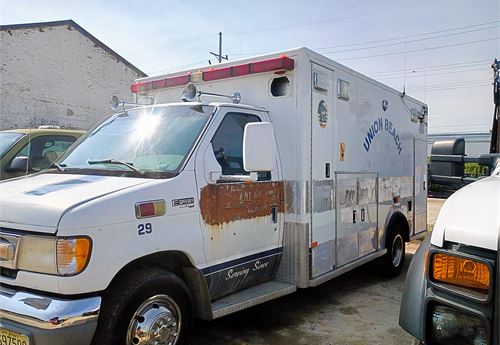 1997 Ford Ambulance$575 · Union Beach, NJ
closes in 7 hours · Municibid
 2014 Chevrolet Express Ambulance$2,500 · Bowling Green, VA
Sold: $13,188 mid
closes in 8 hours · GovDeals
 2000 Ford E450 Ambulance$1,625 · Olympia, WA
Sold: $2,625 mid
closes in 4 days · GovDeals
 2014 International life life Ambulance$7,500 · Canton, OH
closes in 8 days · GovDeals
Government bids for medical supplies & equipment, due soonest
All 3 →Open federal bids from SAM.gov on UX Contract, free to search. 1 due this week.