

Title & Registration After Winning
What Government Title Clerks Say Really Happens After You Win the Auction
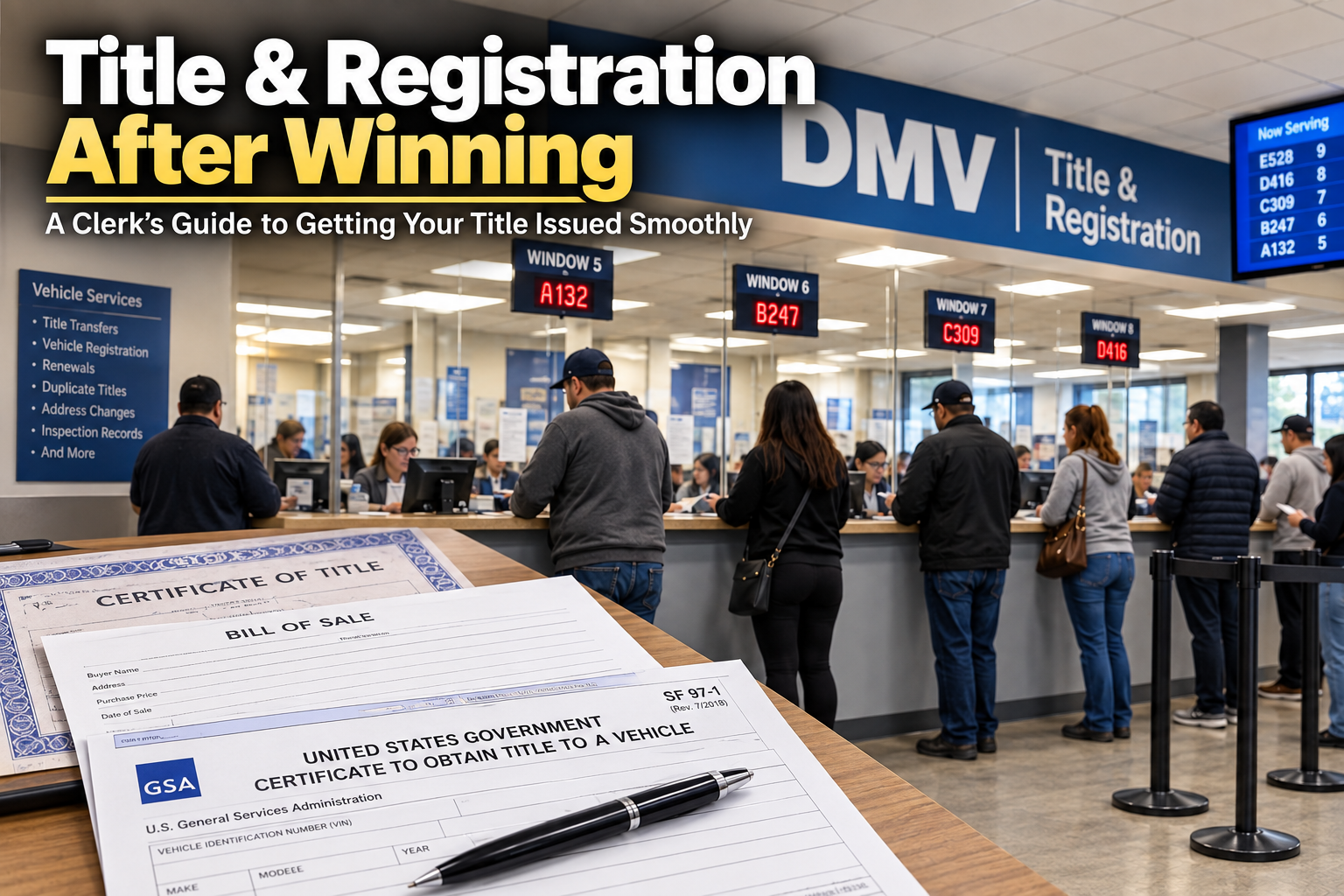
Winning a government auction feels like a victory. You beat the crowd, snagged the deal and now you're ready to hit the road. But according to several government title clerks we spoke with, the real story begins after the bidding ends — when the paperwork comes out. That's where smooth purchases stay smooth, and where small mistakes turn into long, frustrating detours.
Every clerk had the same warning: most title problems are tiny errors that buyers never noticed until they were already hundreds of miles away. A wrong VIN digit. A misspelled name. A missing signature. A federal form that wasn't filled out exactly right. These aren't dramatic issues — but they can stop a title dead in its tracks.
The smartest buyers, clerks said, understand the title process before they bid and double-check everything before they leave the auction lot.
Know What You're Actually Buying
Government vehicles don't all come with the same ownership document. Local agencies often issue a standard state title. Federal agencies may issue Standard Form 97-1 — the United States Government Certificate to Obtain Title to a Vehicle, better known as the SF 97.
Clerks stressed this point: an SF 97 is not your new state title. It's federal proof of ownership that your state DMV uses to create your actual title. And not every vehicle qualifies for one. Military-design vehicles, construction equipment, farm machinery and non-highway assets may come only with a bill of sale or other transfer paperwork.
Buyers constantly assume, "It's government, so I'll get an SF 97." Clerks said that assumption causes more headaches than almost anything else.
Your Paperwork Package Can Vary
Depending on the agency, you might receive:
- A state title
- An SF 97
- A bill of sale or purchaser's receipt
- An auction invoice
- Odometer and damage disclosures
- Lien releases
- Inspection or decommissioning documents
Clerks said the combination doesn't matter as much as the chain: the paperwork must clearly show the vehicle going from the government to you. And your name must match exactly. If you registered as "Robert A. Smith" but want the title in "Smith Construction LLC," you may have a problem. DMVs cannot simply swap buyers.
The Parking-Lot Check That Saves Weeks
Every clerk emphasized this moment: don't drive off until you check everything.
Put the paperwork next to the vehicle and compare the VIN character by character. Verify the year, make, model, your name, the purchase date, the price, the mileage, the signatures, the notarization and any title brands.
One wrong VIN digit can stop the entire process. So can a missing signature.
Federal documents require even more care. SF 97s are secure, pre-numbered forms, and clerks warned that states may reject any certificate with erasures, strikeovers or handwritten "fixes." If something is wrong, do not correct it yourself. Contact the issuing agency.
What the SF 97 Actually Does
Buyers hear "SF 97" constantly but rarely understand it. Clerks explained it simply: the SF 97 is the federal government's way of telling your state DMV, "We owned this vehicle, we sold it, and here's the proof you need to issue a title."
It does not replace your state's fees, taxes, insurance requirements or inspections. Your state still decides what is necessary to title and register the vehicle.
Protect the original. Don't write on it, erase anything, change the buyer or "fix" errors. Let the agency correct its own document.
Title Brands and Restrictions Matter
Unusual government vehicles often come with restrictions: salvage, junk, flood, nonrepairable or other brands. Clerks said buyers frequently assume that repairing a vehicle removes the restriction. It doesn't. Some brands follow the vehicle across state lines.
Sometimes the low auction price isn't about mechanical condition — it's about the paperwork.
Mileage Isn't Always What It Seems
Federal odometer rules apply to model-year 2011 and newer vehicles for 20 years. Older vehicles fall under older exemptions. Clerks said buyers often misunderstand mileage labels like actual, not actual, exceeds mechanical limits or exempt — and those labels matter.
Police vehicles, ambulances and utility trucks often have thousands of idle hours that never appear on the odometer. The mileage tells part of the story, not the whole story.
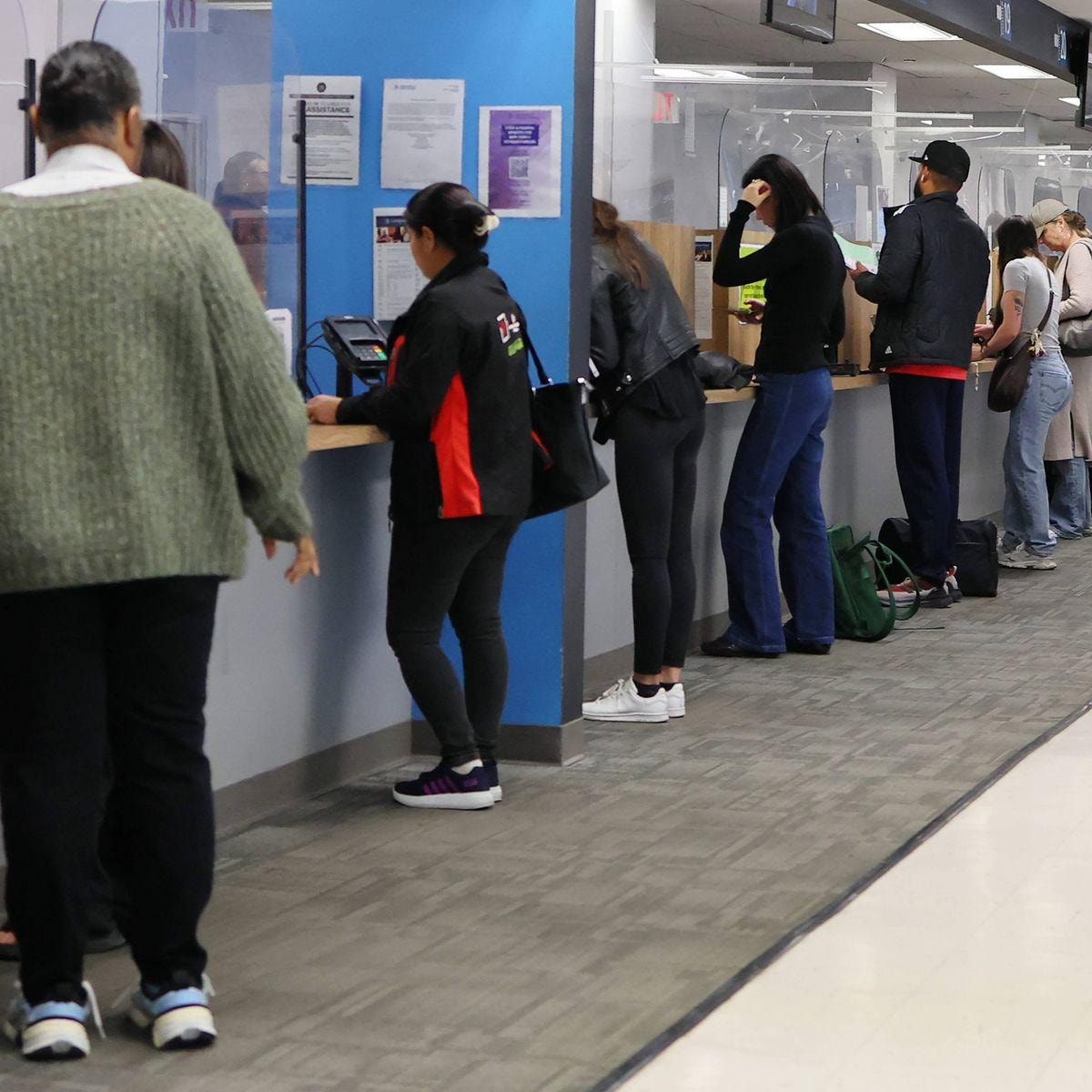
Title and registration requirements vary by state and by the ownership documents provided with the vehicle.
How the DMV Usually Handles Your Title
Once you have the ownership documents, your state takes over. Requirements vary widely, but you'll generally need:
- The ownership document
- Purchase paperwork
- A title application
- Identification
- Insurance (if registering)
- Odometer and damage disclosures
- VIN verification or inspections
- Taxes and fees
Clerks warned against relying on generic online checklists. Requirements differ not only between states but also between vehicle types — passenger cars, salvage vehicles, reconstructed vehicles, former military vehicles, trailers and specialty equipment.
A Bill of Sale Isn't Always the Main Document
Clerks said buyers often believe every DMV requires a bill of sale. Not true. Some states rely primarily on the assigned title or federal document. Keep your bill of sale, but understand it's part of the ownership file — not automatically the main title document.

Out-of-state purchases can involve additional title, VIN verification or inspection requirements depending on the buyer's home state.
Buying Out of State: Where Mistakes Get Expensive
This is where clerks see the biggest problems. Before bidding, call your home-state DMV and ask what they require for titling a government vehicle purchased in another state. Requirements for VIN inspections, notarization, emissions, safety, insurance, temporary permits, salvage rules and former police vehicles vary dramatically.
A small requirement becomes a major problem once the vehicle is sitting in your driveway.
Inspections Aren't All the Same
Some states require VIN verification for out-of-state vehicles. Some don't. Some distinguish between identity inspections, safety inspections, emissions inspections and salvage/reconstruction inspections. Clerks said buyers often confuse these — and show up with the wrong paperwork.
Former Police Vehicles: Popular, But Misunderstood
Former police vehicles generate more questions than almost any other category. There is no universal rule requiring every piece of police equipment to be removed before titling. State laws vary.
Emergency lights, sirens and restricted equipment may be illegal to operate. Decommissioning can leave abandoned wiring, cut circuits, antenna holes, console brackets, partitions, push bumpers and other remnants. Poorly removed equipment can create electrical hazards.
Inspect everything before leaving the lot.
Ghost Markings and Equipment Removal
Even when graphics are removed, ghosting may reveal POLICE, SHERIFF, STATE TROOPER, K-9 or 911. Whether that's legal depends on your state. Also verify that equipment removal hasn't affected headlights, brake lights, turn signals, airbags, seat belts, factory switches, battery connections or wiring.
Seized Vehicles Aren't the Same as Retired Fleet Vehicles
A retired fleet vehicle was owned by a government agency. A seized or forfeited vehicle reached the government through legal seizure. Different chains of ownership, different paperwork. Read the auction terms carefully.
Run the VIN Before You Bid
Every clerk said this should be mandatory. A history report can reveal title brands, salvage history, flood history, odometer discrepancies, prior jurisdictions and total-loss records. NMVTIS is the federal system that provides approved consumer access.
A clean report doesn't guarantee a perfect history, but a bad brand is something you want to discover before bidding.
Check the VIN on the Vehicle — Not Just the Listing
Auction listings can be wrong. Compare the VIN plate to the listing and to every document. If the listing says 1FM5K8AR… and the vehicle says 1FM5K8AT…, stop. Resolve discrepancies immediately.
Check for Open Safety Recalls
Title history and recalls are separate. Use the VIN to check for open recalls through NHTSA. Government ownership does not guarantee every recall was completed.
Salvage, Junk, Flood and Nonrepairable Vehicles
Some classifications restrict or prevent highway use entirely. Some require extensive inspections before a rebuilt title can be issued. A $2,000 bargain becomes a $2,000 lawn ornament if your state refuses to register it.
Trailers, Equipment and Military Vehicles
Government auctions sell everything from trailers to generators to military vehicles. Some never had conventional titles. Some use serial numbers instead of VINs. Some cannot be registered for highway use. Federal guidance specifically excludes certain non-highway vehicles from SF 97 eligibility.
Know the document before bidding.
Taxes Aren't Automatically Waived
Government auctions are not tax-free. The SF 97 does not waive state or county taxes. Keep proof of any tax paid at purchase. Your state determines whether additional tax applies.
Insurance and Registration Are Separate
Title establishes ownership. Registration authorizes operation. Insurance requirements vary depending on whether you're titling only or registering. You may need a temporary permit, trailer or transporter to move the vehicle legally.
Never Title Jump
Clerks were blunt: do not buy a vehicle, skip the title process and sell it to someone else using your auction paperwork. Title jumping can create legal and tax problems and may violate state law. Frequent buyers may also trigger dealer-licensing requirements.
If a Lien Appears in the History
Investigate it. A historical lien doesn't always mean an active lien, but clerks said buyers should ask the selling agency before titling. Do not alter paperwork or make assumptions.
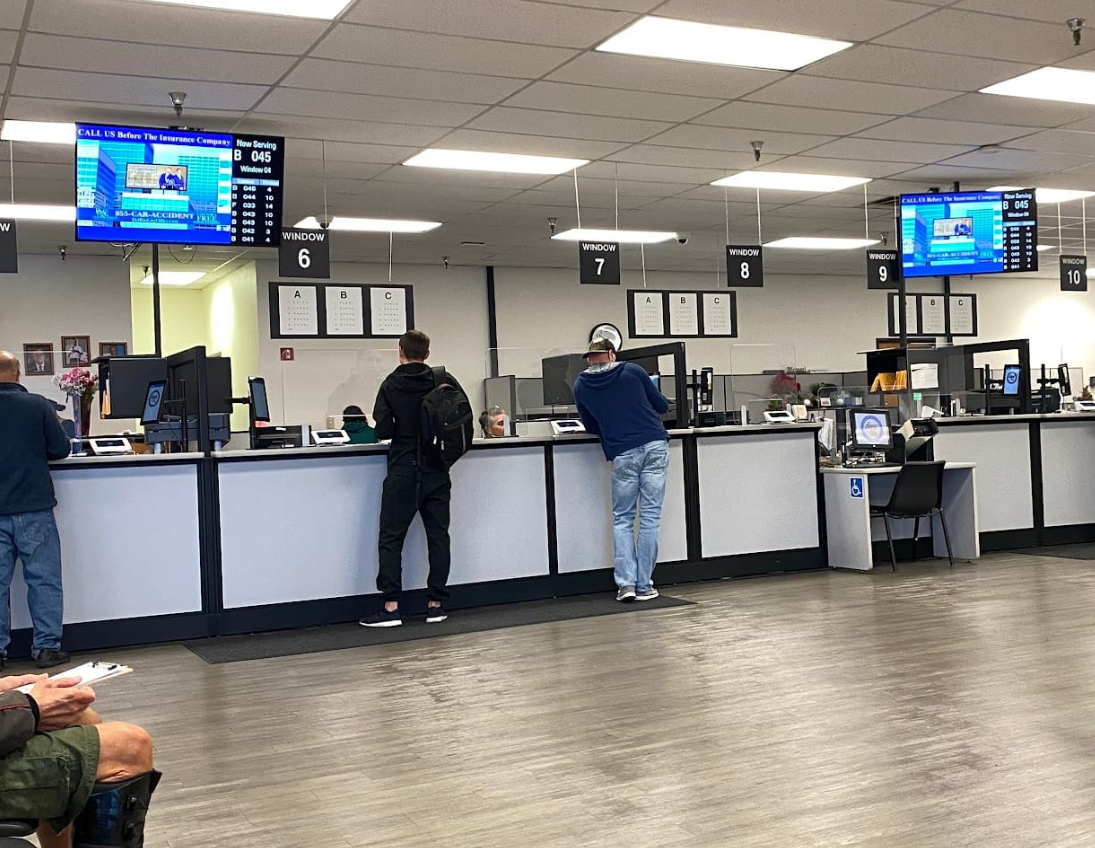
Government auction buyers should organize their ownership documents before visiting the title office.
If Your DMV Clerk Has Never Seen an SF 97
It happens. Explain that it is the United States Government Certificate to Obtain Title to a Vehicle — Standard Form 97. Ask for a supervisor or title specialist if needed. Do not allow anyone to alter the federal document.
If Your Paperwork Is Wrong
Contact the selling agency immediately. Common issues include incorrect VINs, misspelled names, missing signatures, incorrect mileage, missing assignments, missing notarization and unexpected title brands. Do not fix documents yourself. Let the agency correct them.
The Smartest Buyers Prepare Before They Bid
Ask yourself:
- What ownership document will I receive?
- Can this vehicle be titled in my state?
- Does it have a title brand?
- Does my state require inspections?
- Are there special rules for former police vehicles?
- How will I transport it home?
- Is my auction account name exactly how I want the title issued?
Five Minutes That Prevent Five Weeks of Headaches
Before leaving the auction, take five minutes. Compare the VIN, verify your name, check the vehicle description, mileage disclosure, title brand, signatures and notarization. Make sure you received every promised document. Photograph the paperwork for your records.
Those five minutes can save you five weeks of frustration.
From the Clerks' Side of the Counter
The easiest government auction vehicles aren't the newest or the most expensive — they're the ones with clean paperwork. Research your state's requirements before bidding. Understand the ownership document before paying. Compare it to the vehicle before leaving. Know whether the vehicle can be titled and registered for your intended use. Organize everything before visiting the DMV.
Winning the auction makes the vehicle yours. Getting the paperwork right is what gets your name onto the state title — and gets the vehicle legally onto the road.
Find active government vehicle auctions nationwide — police interceptors, fleet trucks, surplus equipment and more.
Search Auctions