


Before Keystone: Where Pennsylvania State Police Cars Went to Retire
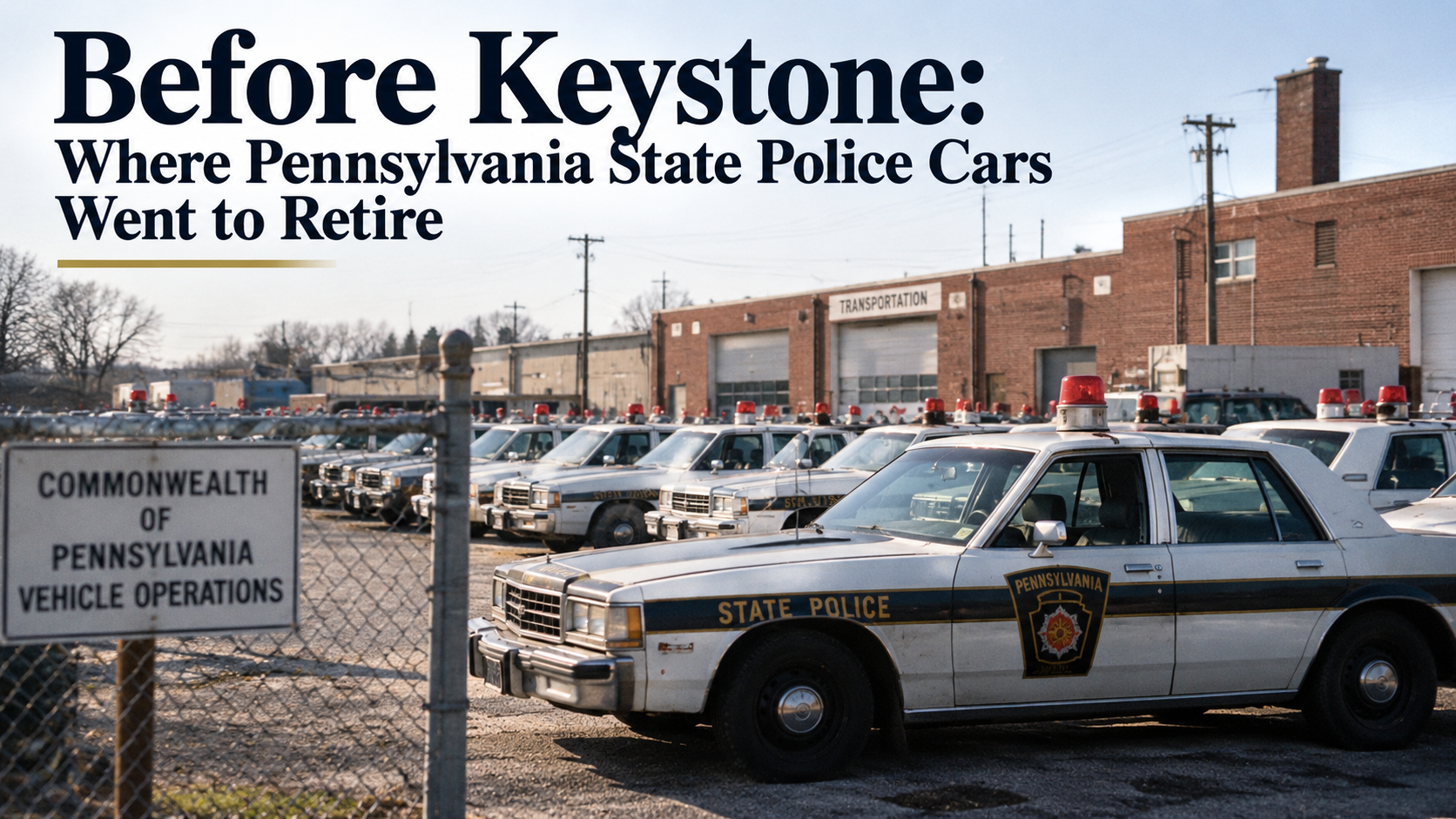
Long before retired Pennsylvania State Police cruisers appeared at Keystone Auto Auction in Grantville, many ended their government careers at 20th and Herr Streets in Harrisburg. There, old patrol cars were stripped of police equipment, prepared for auction and given the chance to begin a second life.
UX AuctionsLong before retired Pennsylvania State Police cruisers appeared at Keystone Auto Auction in Grantville, many ended their government careers at 20th and Herr Streets in Harrisburg. There, old patrol cars were stripped of police equipment, prepared for auction and given the chance to begin a second life.
A State Police official described the operation during legislative testimony in 1985. Visitors might find a “whole pile of vehicles” at the facility—sometimes hundreds of new cruisers awaiting assignment, and other times rows of retired police cars being prepared for sale. New vehicles came in, worn ones went out, and years of patrol duty separated the two.
“whole pile of vehicles”
PSP Official, 1985 Legislative Testimony
In 1985, Pennsylvania State Police testimony described retired vehicles at 20th and Herr Streets that had been stripped of police equipment and were being prepared for auction.
Those cars had worked hard. Plymouths, Dodges, Chevrolet Caprices and Ford Crown Victorias patrolled interstates, turnpikes, rural roads and communities without full-time local police departments. They accumulated high mileage, long periods of idling and the wear created by crashes, emergencies and round-the-clock service.
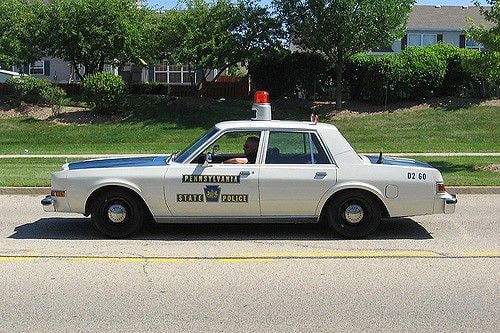
A Pennsylvania State Police patrol sedan—one of the Plymouths, Dodges and Caprices that worked Pennsylvania’s interstates and rural roads before the Crown Victoria era.
Eventually, keeping an aging cruiser on frontline duty stopped making financial sense. That did not mean the car was worthless. After its radios and specialized equipment were removed, a former police vehicle could still provide years of transportation or supply valuable parts.
Government auctions attracted buyers looking for inexpensive cars, work vehicles, resale inventory or police-package components. Others simply wanted to own a genuine former Pennsylvania State Police cruiser. When the auctioneer called “sold,” the car’s Commonwealth career ended and its private life began.
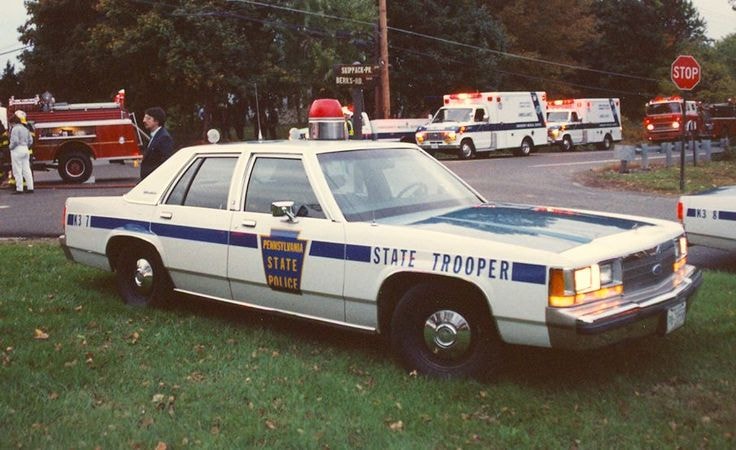
A Pennsylvania State Police patrol car. These vehicles accumulated high mileage and round-the-clock service before entering the Commonwealth’s surplus disposal system.
The Grantville YearsPennsylvania later moved vehicle sales into a commercial auction setting. By 2008, Commonwealth contracting records identified Manheim PA Auction Services Inc., operating as Keystone Auto Auction, as the contractor responsible for promoting and auctioning state vehicles to the public. Grantville became the modern center of a disposal system that had already existed for decades.
Retired police vehicles remain a significant part of those sales. Pennsylvania’s October 2024 auction offered more than 300 vehicles, including over 90 former State Police units. The December auction included more than 375 vehicles, with over 100 retired PSP vehicles among them.
The auctions generate substantial revenue. Commonwealth vehicle sales produced $9.1 million in 2023 and a record $10.1 million in 2024, for a two-year total of $19.2 million. Those figures include vehicles from across state government—not just State Police cruisers—but they demonstrate how much value remains in equipment agencies no longer need.
Pennsylvania now holds six Commonwealth vehicle auctions each year at Manheim Keystone Pennsylvania in Grantville. The goal is to retire vehicles before rising repair costs, declining reliability and falling resale prices turn them into liabilities. During 2023 and 2024, Pennsylvania replaced 1,639 leased vehicles, representing 43 percent of that fleet, along with 24 percent of agency-owned vehicles. The Department of General Services estimated that the replacement program avoided about $1.5 million in repair costs over those two years.
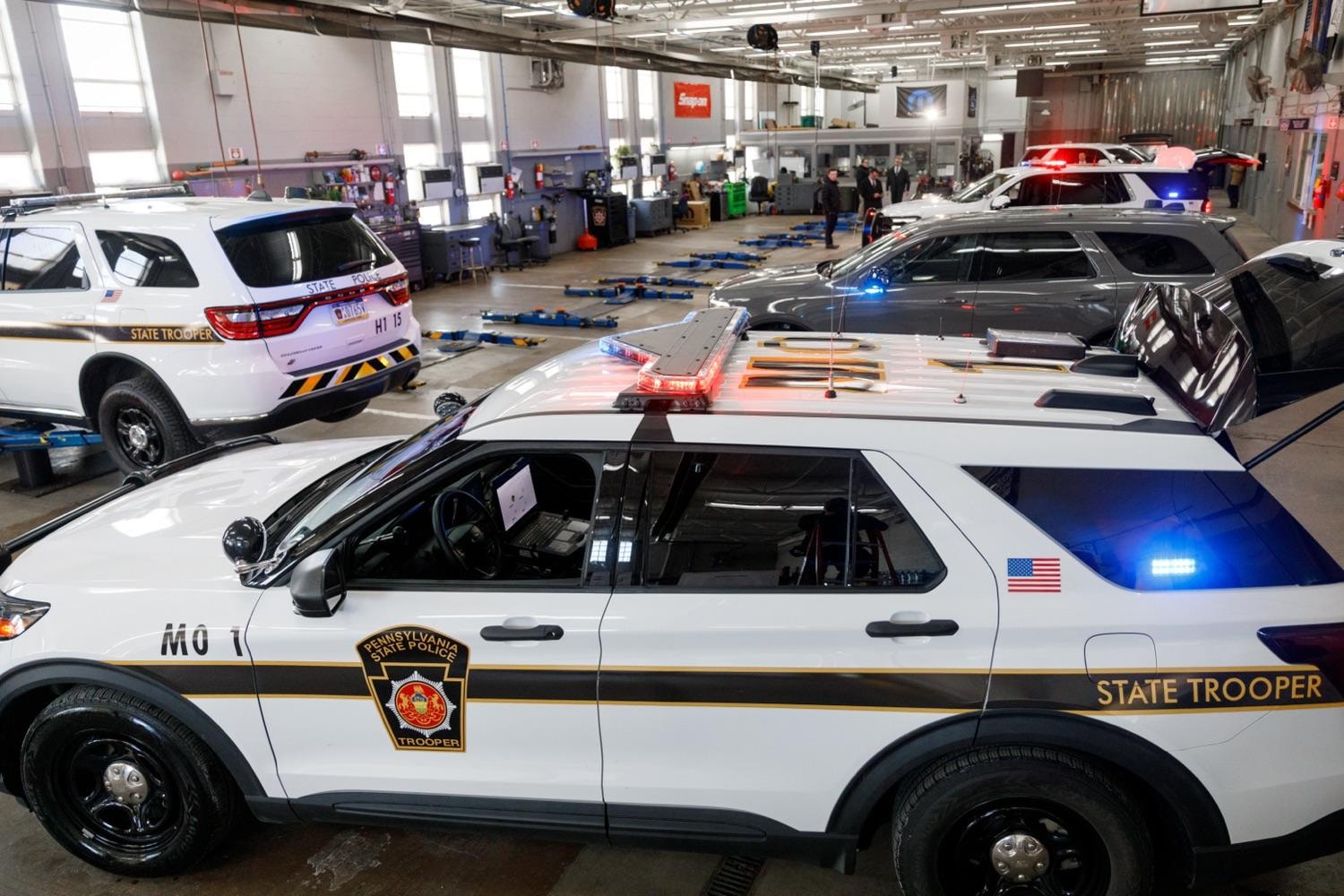
Modern Pennsylvania State Police vehicles at a fleet facility. Today’s PSP fleet includes Ford Police Interceptor Utilities and other current-generation pursuit vehicles.
Before KeystoneAuction revenue does not directly fund the entire Pennsylvania State Police. PSP operates on a multibillion-dollar budget covering personnel, stations, communications, laboratories, aircraft, training, technology and thousands of vehicles. Selling old cruisers is asset recovery: taxpayers bought the cars, PSP used them for police service, and the Commonwealth recovered whatever value remained.
Traffic tickets are also separate from auction proceeds and are not a direct PSP cash register. Pennsylvania law determines where fines and related revenue go, while the State Police receive funding through appropriations. The Commonwealth has also been reducing PSP’s reliance on the Motor License Fund by $50 million annually, leaving more transportation money available for roads and bridges.
The cars and selling methods have changed since 1985. Plymouths and Dodge Diplomats gave way to Caprices and Crown Victorias, followed by Chargers, Explorers and modern police SUVs. The Harrisburg yard gave way to Keystone’s commercial auction lanes, while paper files became computerized fleet-management systems.
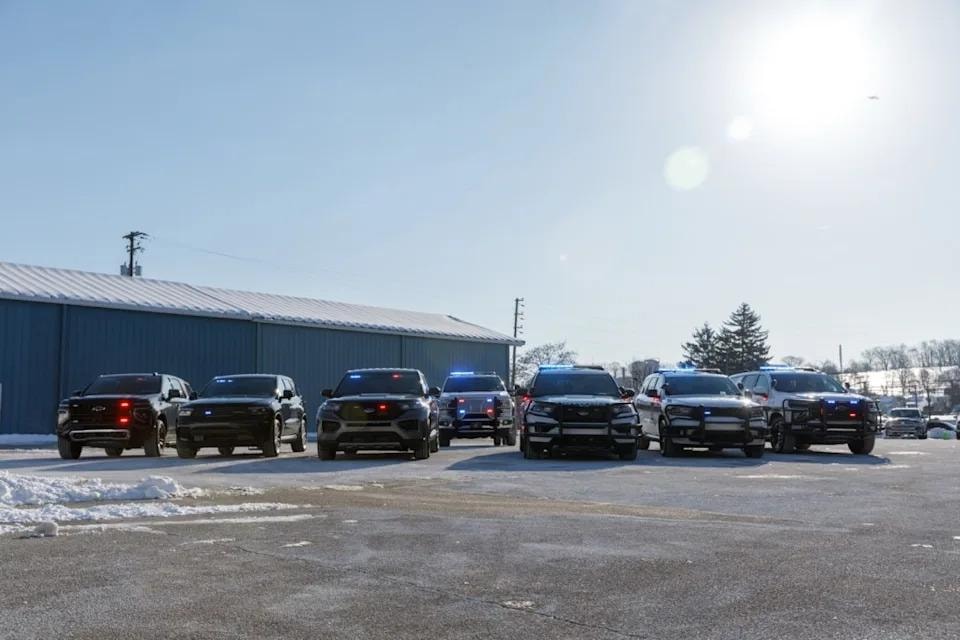
Current Pennsylvania State Police vehicles. The Commonwealth now holds six vehicle auctions per year at Manheim Keystone Pennsylvania in Grantville.
The Cycle ContinuesThe basic cycle never changed. Pennsylvania buys a cruiser, equips it, maintains it and uses it until continued police service no longer makes economic sense. The equipment comes out, the car enters an auction and somebody raises a bidder number. A moment later, the Commonwealth’s police car becomes somebody else’s car.
The basic cycle never changed. Pennsylvania buys a cruiser, equips it, maintains it and uses it until continued police service no longer makes economic sense. The equipment comes out, the car enters an auction and somebody raises a bidder number. A moment later, the Commonwealth’s police car becomes somebody else’s car.
UX Auctions