







Gov Surplus
Dr. Kevorkian’s Deathmobile
It carried the dying, cheated the crusher, got banished from eBay and gathered dust in a pawn shop on 8 Mile. Now Dr. Death's old van has found its final resting place: a haunted mansion in Las Vegas.
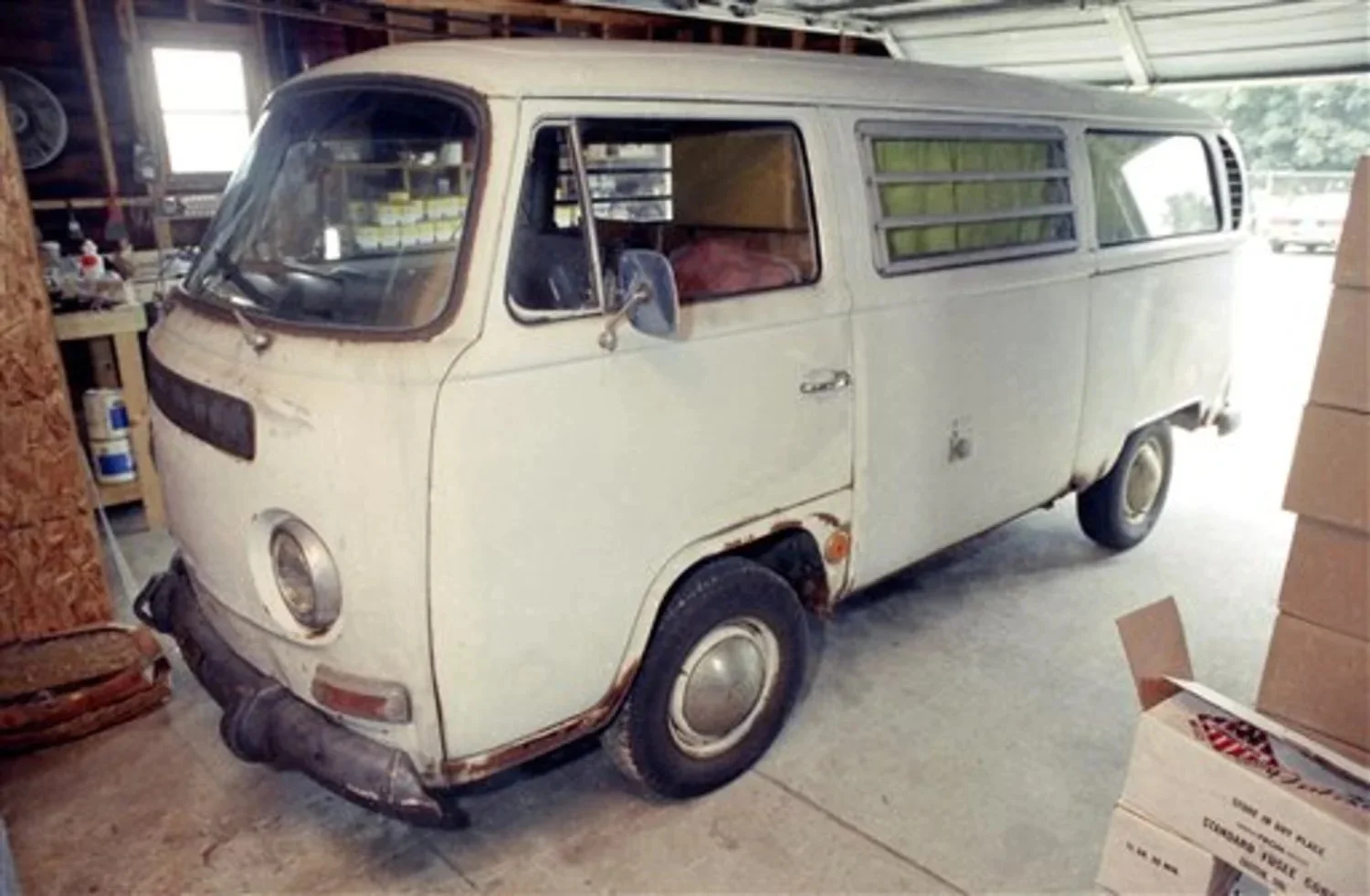
Deep inside a 1938 mansion on East Charleston Boulevard, past cursed dolls and a box said to hold a demon, a rusty white 1968 Volkswagen bus sits in the dark. It doesn't run. Its interior is worn down to bare metal in places. Visitors lean in to peer through its windows anyway.
This is Dr. Jack Kevorkian's van. The press called it the "Deathmobile." People died in the bed in its back. Bodies rode in it to emergency rooms. In 1997 it was sent off for scrap, and by rights it should have been crushed into a cube.
Instead, it kept coming back. This is the story of how the Deathmobile cheated the scrap yard, got banned from eBay, haunted the back room of a Detroit pawn shop, and ended up as the prize of a professional ghost hunter.
The man and the van
Jack Kevorkian was a retired Detroit-area pathologist who made himself the public face of physician-assisted death in the 1990s. Between 1990 and 1998, he claimed to have helped more than 130 people end their lives. The press called him "Dr. Death." Supporters called him a pioneer of patient choice. Prosecutors spent most of the decade trying to convict him.
The van was part of his life before it was part of his notoriety. Kevorkian lived out of it for stretches. It was a 1968 Volkswagen Type 2, the boxy microbus of the counterculture era, reportedly a Westfalia camper.
One myth needs clearing up early. The van was not the site of all 130 deaths. Most took place in patients' homes or in motel rooms. The van figured in a handful of cases, but two of them made it famous.
Two deaths that made it famous
On June 4, 1990, Janet Adkins died in the back of the van. She was a 54-year-old teacher from Portland, Oregon, recently diagnosed with Alzheimer's disease. Kevorkian had parked at Groveland Oaks County Park near Holly, Michigan, after searching for a place to carry it out and settling on his own van. Hers was the first assisted death of his public campaign.
The case set the pattern for the decade. Michigan had no law against assisted suicide at the time. A murder charge against Kevorkian was dismissed that December. The state suspended his medical license the following year, but he kept going.
Three years later, the van was back in the headlines. On August 4, 1993, Thomas Hyde, a 30-year-old Novi man with ALS, was found dead inside it on Belle Isle, the Detroit island park. Michigan had since banned assisted suicide, and Hyde's death became the first big test of the new law. A Detroit jury acquitted Kevorkian in May 1994.
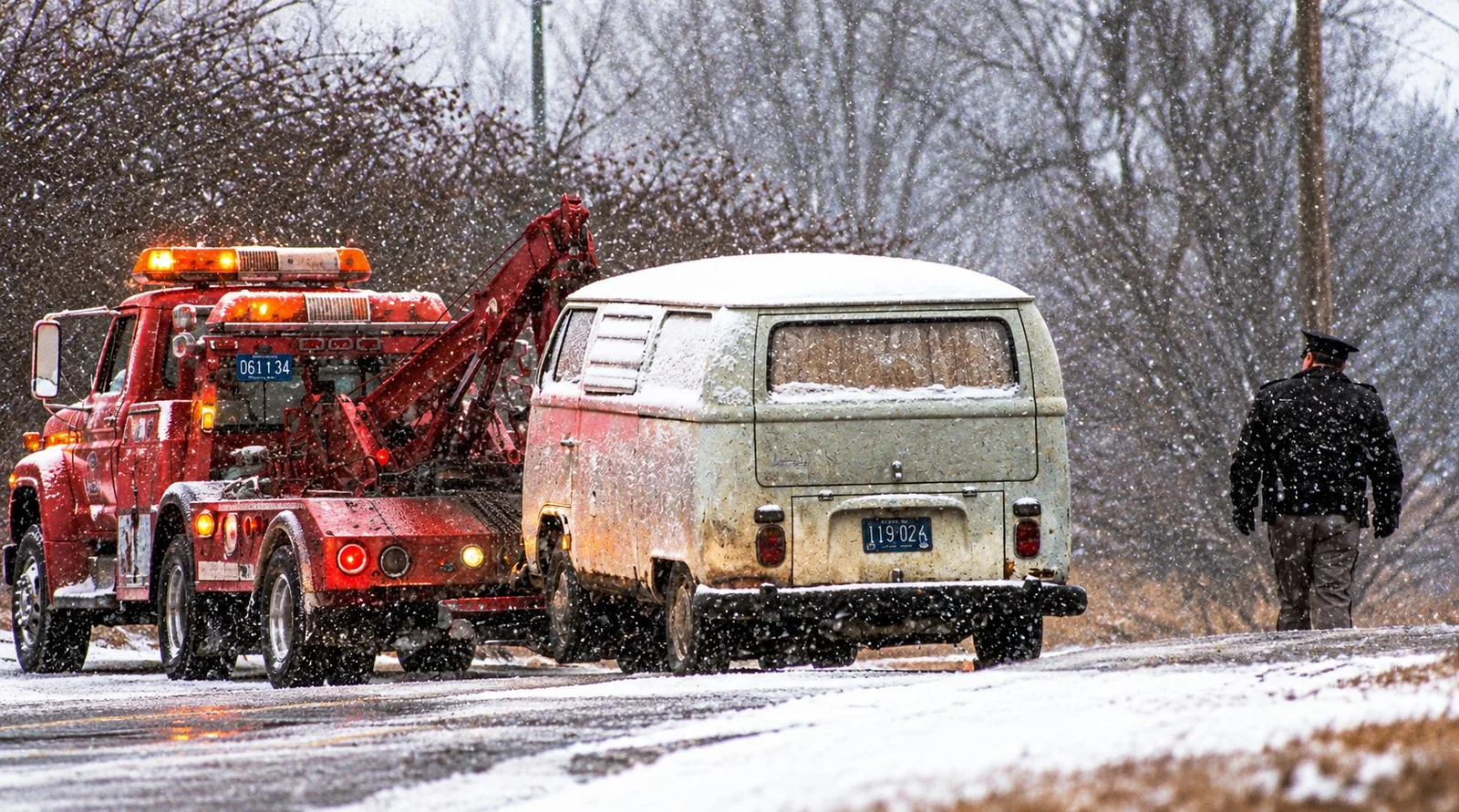
The van kept turning up in police files. On January 29, 1996, it sat in the parking lot of the medical examiner's office in Pontiac, and authorities said it held the body of a woman. A tow truck hauled it away through the snow, a scene the AP photographed and one that became the defining image of the "Deathmobile."
The van also served a grimmer, more practical role. According to the Associated Press, it was often used to deliver bodies to hospital emergency rooms.
From scrap yard to eBay ban
In 1997, Kevorkian got rid of the van. Paperwork later found inside shows it went to a Volkswagen parts yard for $150. His longtime lawyer, Mayer Morganroth, insisted Kevorkian had turned it in for scrap and never made money on it. Kevorkian assumed it had been crushed.
It hadn't. Jack Finn, who ran an Auburn Hills used-parts business called Recycled Bugs, said he acquired it that year and kept it in a warehouse.
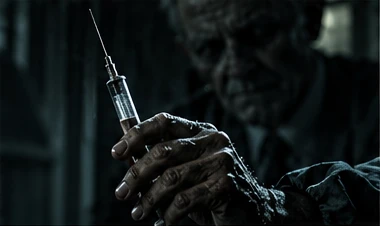
Kevorkian's own story ended in a courtroom. After CBS's "60 Minutes" aired a 1998 video of him giving a lethal injection to Thomas Youk, a man with ALS, he was convicted of second-degree murder. He spent about eight years in prison.
In April 2010, Finn listed the van on eBay. The timing was no accident: HBO was premiering You Don't Know Jack, with Al Pacino as Kevorkian and a replica of the van on screen. Bidding reached $3,400 before eBay pulled the listing, citing its ban on "murderabilia" tied to notorious killings.
Finn shrugged it off and consigned the van to Kruse Auctions in Auburn, Indiana, for its spring sale that May. Kevorkian, by then out of prison, let it be known through his lawyer that he wished the sale would stop. Whether the van sold at Kruse is unclear; the auction house was collapsing that same month, as Indiana pulled its license over unpaid consignors.
Hardcore Pawn
Kevorkian died in June 2011, at 83. The van outlived him and landed somewhere fitting for a piece of Detroit lore: American Jewelry & Loan, the family pawn shop on 8 Mile made famous by truTV's Hardcore Pawn.
Owner Les Gold bought it for $20,000. The seller had first wanted $100,000. The two settled the price with a coin toss: tails meant $20,000, heads $40,000. Gold won, and later guessed the van might fetch about $40,000. (Reports differ on the year of the deal, placing it in 2011 or 2013.)
For years the van sat in the shop's back room, collecting dust while customers posed with it for photos. One buyer put it on layaway, then walked away. In the summer of 2015, the shop relisted it online for $49,995.95.
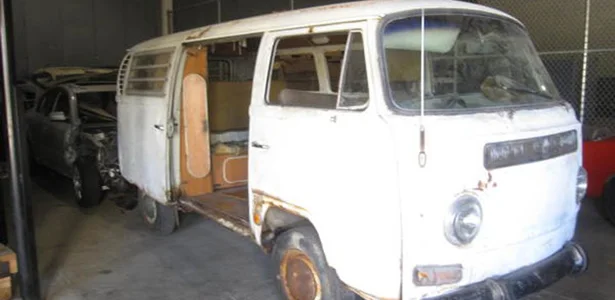
Vice president Seth Gold was frank about what buyers were getting. Strip away the history, he told the Detroit Free Press, and it was "a 1968 Volkswagen that doesn't run." The odometer read 18,732 miles, but with only five digits, nobody could say how many times it had rolled over.
The ghost hunter's prize
Zak Bagans, host of Travel Channel's Ghost Adventures, called the shop in late August 2015. The deal closed overnight. He paid $32,500 without seeing the van in person, and got its original registration and a copy of Kevorkian's driver's license in the bargain. He told TMZ he had a "paranormal project" in mind.
It was his second macabre buy that year. In March, he had bought a cauldron tied to the killer Ed Gein. The van's own paranormal résumé was thin. The only reported brush with the supernatural came when TV medium Theresa Caputo walked near it during a visit to the shop.
The project turned out to be a museum. In October 2017, Bagans opened Zak Bagans' The Haunted Museum in Las Vegas, inside the 1938 Wengert Mansion. More than 30 rooms hold his collection, from the Dybbuk Box and the "Peggy" doll to a chair from Michael Jackson's final home.
The van is still there, parked among more than 30 rooms of cursed objects. Visitors can peer into the bus where Janet Adkins and Thomas Hyde died. And like everything else in the mansion, it comes with a ghost story. Bagans and others claim they watched a dark, hooded figure glide through a closed door.
Skeptics who have toured the place doubt that any of it is haunted at all. Believers say that's exactly what a skeptic would say.
The van that wouldn't die
The Deathmobile has had more lives than most cars. In 1990 it was evidence in a murder case. In 1997 it was supposed to be scrap. By 2010 it was too cursed for eBay. By 2017 it was a haunted-house attraction, sold on a ticket alongside possessed dolls.
Kevorkian's argument has outlived him too. Several U.S. states and a number of countries now allow medical aid in dying under strict rules, a debate he dragged into the open. Whether his van belongs in a museum of medical history or a house of horrors is a smaller version of the question people still ask about the man himself.
This Halloween, it sits in the dark in Las Vegas, going nowhere. It hasn't run in years. It doesn't need to. Some vehicles carry people. This one carries a story nobody has managed to bury.
Get First Contact from UX Auctions · Free. We'll email you first when the sale opens.
The Deathmobile went from a $150 parts yard to a $32,500 sale, and stories like it are part of the UX Auctions Special Halloween Edition. Find your own one-of-a-kind vehicle on every government auction platform at once at uxsearch.app.
Photo & Resource Information Credits: Photos supplied to UX Auctions
© 2026 UX™ LLC. All Rights Reserved.