


From Afghanistan to Main Street
How the Oshkosh M-ATV can find a second mission with American law enforcement
Auctions News Network Staff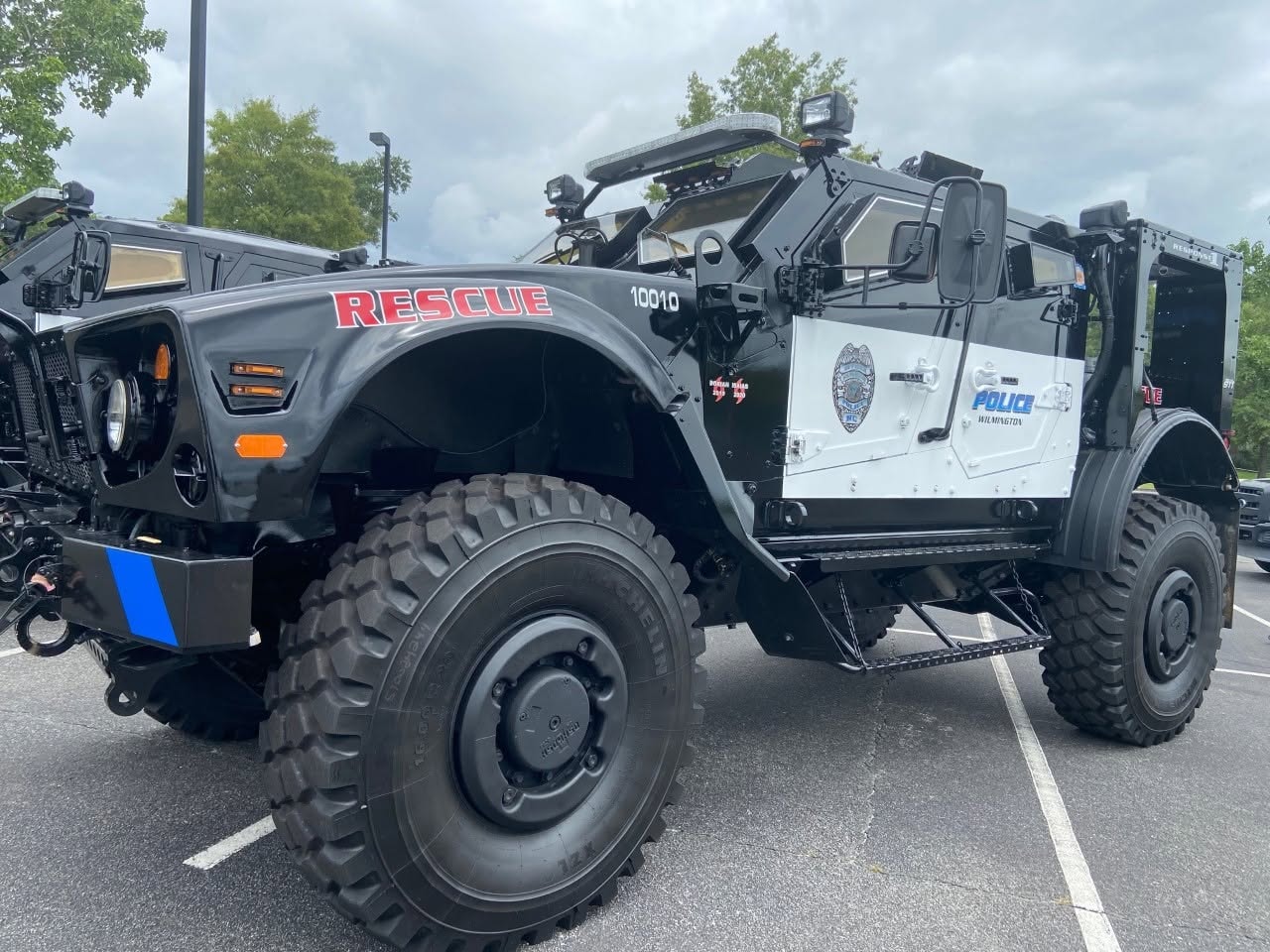
An Oshkosh M-ATV serving with the Wilmington Police Department — an example of a former military tactical vehicle beginning a very different second mission.
Drive past a police or sheriff's department somewhere in America and you may see something that looks considerably more at home in Afghanistan than in a municipal motor pool.
An Oshkosh Defense M-ATV.
These aren't look-alike armored trucks built for police departments. The M-ATV — MRAP All-Terrain Vehicle — was developed for the U.S. military's urgent need for a vehicle combining mine-resistant protection with the mobility required for Afghanistan's difficult terrain. Oshkosh received the production award in June 2009, and the first vehicles arrived in Afghanistan that October.
The tan vehicle pictured with this article is the 226th M-ATV built by Oshkosh Defense, photographed during the vehicle's early fielding period.
So how does a vehicle built for Afghanistan eventually end up serving an American police or sheriff's department?
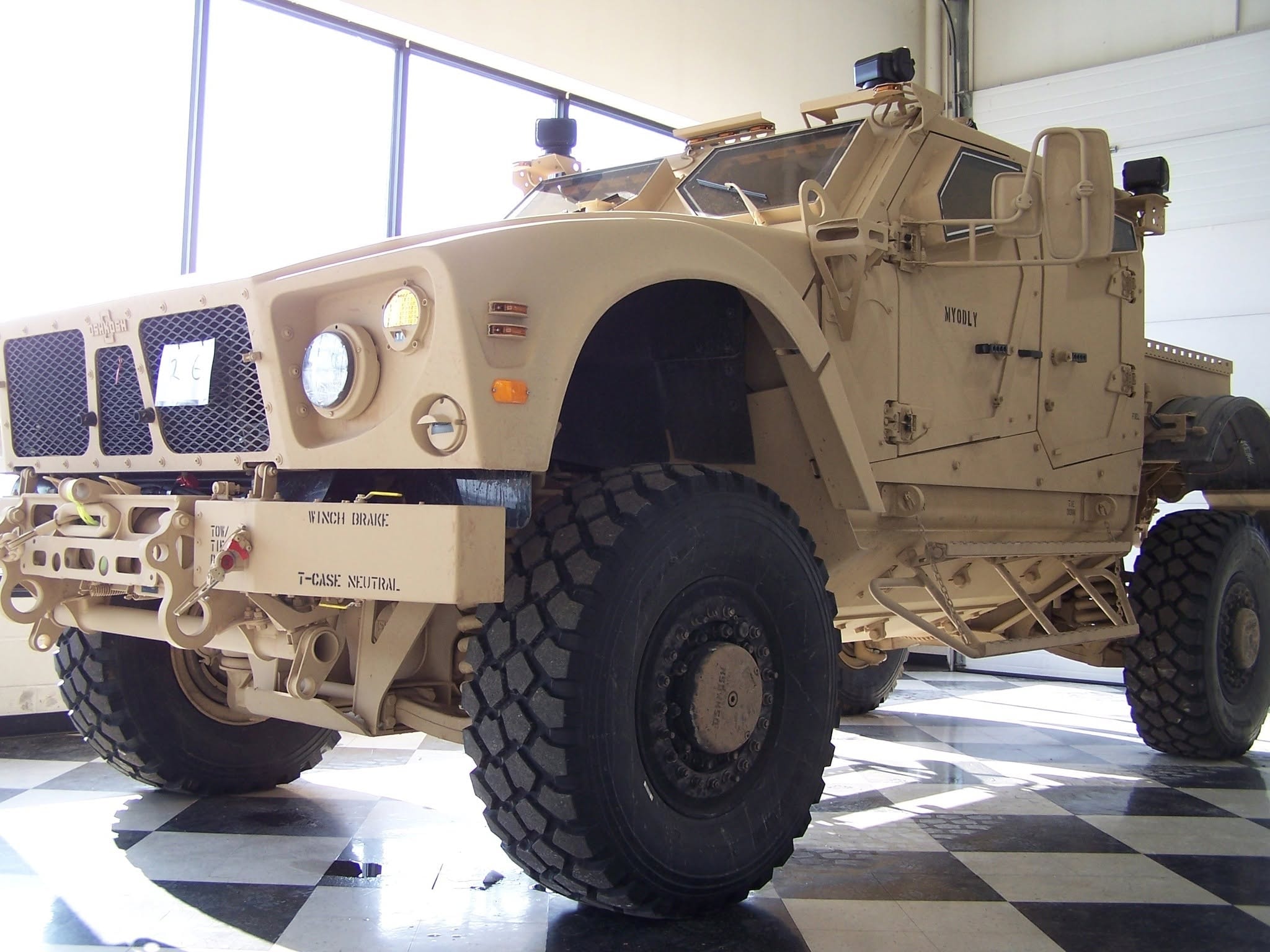
The 226th M-ATV built by Oshkosh Defense during the early production and fielding of the MRAP All-Terrain Vehicle program.
The 1033 Program
The answer can be the federal LESO/1033 Program, administered by the Defense Logistics Agency.
The program allows qualified law-enforcement agencies to obtain excess military property that is no longer needed by the Department of Defense.
And there's an important distinction: the government isn't buying new M-ATVs to hand out to police departments.
The equipment comes from excess military property and reserve stocks that are no longer required.
That creates an entirely different path for government surplus.
Instead of automatically being sold, some military equipment can move from one government mission to another.
An M-ATV at No Purchase Cost
A participating law-enforcement agency can acquire an available M-ATV through the program without purchasing the vehicle from the federal government.
That doesn't mean operating one costs nothing. The receiving agency assumes responsibilities associated with transportation, operation, maintenance and support.
And these tactical vehicles aren't treated like an old municipal pickup truck.
Controlled tactical vehicles remain federal property. If the receiving agency no longer needs the vehicle, it goes back through the LESO disposition process rather than simply being placed in a local government auction.
Not Every Department That Wants One Gets One
Armored vehicles have their own request process.
Agencies seeking an armored vehicle must submit a request and justification, and MRAP requests require additional documentation.
When vehicles become available, LESO considers factors including availability, when the request was received, geographic responsibility and fair and equitable distribution.
That process can put a remarkably capable piece of former military equipment into a completely different working environment.
They're Not Just for Tactical Teams
The giant armored vehicles naturally get attention, but tactical vehicles represent less than 1% of the equipment transferred through LESO/1033 since the program began.
The program also handles tools, rescue equipment, vehicles, clothing, office supplies and other excess property.
More than 8,800 law-enforcement agencies have enrolled, and the Defense Logistics Agency reports more than $8.4 billion in original acquisition value transferred through the program since its inception.
And the second life of an MRAP isn't necessarily what people expect.
Former military MRAPs have been used for high-water rescues and other emergency operations.
The same characteristics originally intended to keep military personnel moving through extremely difficult conditions can make these vehicles useful when floods, severe weather or damaged roads stop conventional emergency vehicles.
One Vehicle. Two Very Different Missions.
Look closely at M-ATV #226.
Heavy independent suspension. Armored crew compartment. Massive tires. High ground clearance. An interior and chassis designed around requirements far removed from an ordinary commercial truck.
In 2009 and 2010, vehicles like this were being produced at an extraordinary pace to meet an urgent operational requirement in Afghanistan.
Years later, excess tactical vehicles from America's military inventory can enter an entirely different chapter of public service through LESO/1033.
That's one of the more unusual stories in government surplus.
Sometimes government equipment reaches the end of its mission and goes to auction.
Sometimes it gets another mission.
Auctions News Network Magazine